
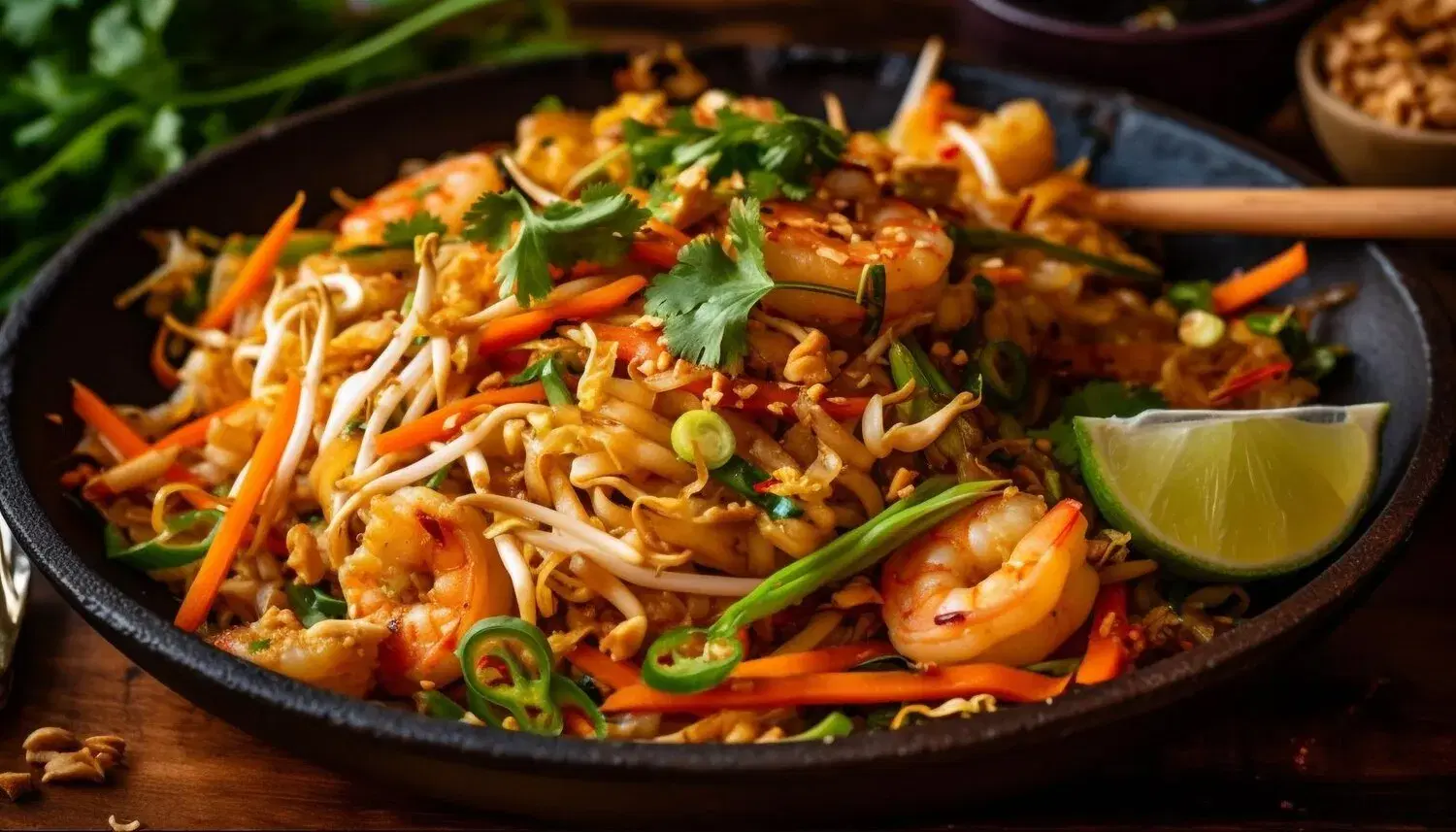

Pad Thai
A classic Thai noodle dish made with stir-fried rice noodles, tofu, shrimp (or other protein), bean sprouts, peanuts, and a sweet-sour tamarind sauce.
Nutrition Facts
* The % Daily Value (DV) tells you how much a nutrient in a serving of food contributes to a daily diet. 2,000 calories a day is used for general nutrition advice.
Premium Feature
Premium Feature
Pad Thai's history is relatively recent. It emerged in the 1930s and 1940s as part of a national campaign to modernize Thailand's cuisine and economy under Prime Minister Plaek Phibunsongkhram. It was intended to replace rice consumption and promote Thai identity by using rice noodles. The government encouraged street vendors to make and sell it, and even provided recipe guidelines.
Premium Feature
Pad Thai has become one of Thailand's most recognizable and beloved national dishes, deeply intertwined with the country's identity and culinary tourism.
National Dish Symbol
Pad Thai is often considered a symbol of Thai cuisine and is a popular choice for introducing foreign visitors to the country's food culture. It represents Thailand's culinary heritage and ingenuity.
Street Food Staple
Pad Thai is widely available as a street food dish throughout Thailand, offering a quick, affordable, and delicious meal for locals and tourists alike. Street vendors often customize their Pad Thai recipes to cater to local preferences.
Culinary Tourism
Many tourists specifically seek out Pad Thai when visiting Thailand, making it a significant contributor to the country's culinary tourism industry. Cooking classes focused on Pad Thai are also popular.
Premium Feature
Pad Thai is a complex symphony of sweet, sour, salty, and savory flavors, creating a vibrant and balanced taste profile.
The key flavors are derived from the tamarind paste which provides the sour and sweet notes. Fish sauce adds saltiness and umami. Palm sugar contributes a deep caramel sweetness. The other ingredients, such as garlic, shallots, dried shrimp, and tofu, give the dish savory and textural complexity. Lime wedges, bean sprouts, and crushed peanuts are added just before serving to enhance freshness and texture.
Premium Feature
Tamarind Paste is Key
The quality of tamarind paste greatly impacts the dish's flavor. Use a good quality paste with a balance of sweet and sour notes. Taste and adjust the amount to your liking.
Don't Overcook the Noodles
Soak the rice noodles properly before stir-frying to prevent them from becoming mushy. They should be cooked al dente, retaining a slight chewiness.
High Heat is Essential
Stir-frying Pad Thai requires high heat to create a slightly charred flavor and prevent the ingredients from steaming. Use a wok or a large frying pan.
Balance the Flavors
Taste and adjust the seasoning (fish sauce, sugar, lime juice) as you cook. The flavors should be balanced, with a good mix of sweet, sour, salty, and umami.
Premium Feature
Explore additional Noodle Dish dishes and restaurants
Explore Noodle DishDiscover top dining spots and culinary experiences in Wien.
Explore WienLearn more about the food culture, restaurant scene, and culinary heritage of Austria.
Explore Austria