
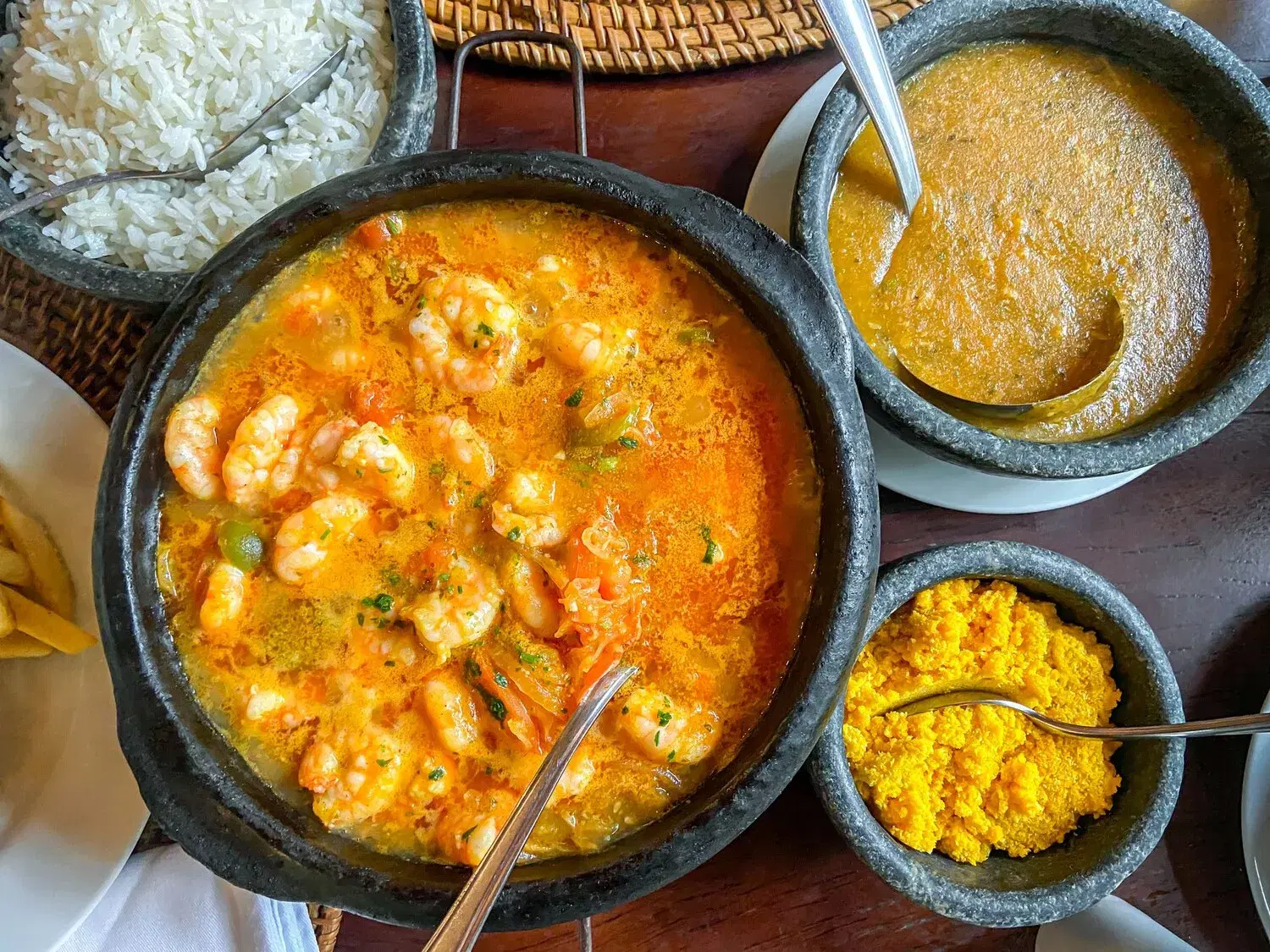

Moqueca Capixaba
A traditional Brazilian seafood stew, typical from Espírito Santo, made with fish, tomatoes, onions, cilantro, and urucum (annatto).
Nutrition Facts
* The % Daily Value (DV) tells you how much a nutrient in a serving of food contributes to a daily diet. 2,000 calories a day is used for general nutrition advice.
Premium Feature
Premium Feature
Moqueca Capixaba's origins are deeply intertwined with the indigenous and African influences of Espírito Santo. Indigenous cooking techniques using clay pots and fresh seafood were combined with African ingredients brought by enslaved people, leading to the unique flavors and methods of preparation seen today. Unlike its Bahian cousin, it excludes dendê oil and coconut milk.
Premium Feature
Moqueca Capixaba is more than just a dish; it's a symbol of Espírito Santo's coastal identity and culinary heritage, often prepared and enjoyed during family gatherings and celebrations.
Regional Identity
Moqueca Capixaba is strongly associated with Espírito Santo, differentiating it from the Moqueca Baiana from Bahia. This distinction is a point of pride for the region and its culinary traditions.
Family and Community
The preparation and sharing of Moqueca Capixaba are often communal events, fostering a sense of connection and tradition within families and communities.
Celebratory Dish
It's a common dish served during special occasions, such as birthdays, holidays, and gatherings with friends and relatives.
Premium Feature
Moqueca Capixaba features a delicate balance of savory seafood, vibrant vegetables, and subtle smoky notes from the annatto, resulting in a fresh and aromatic stew.
The main flavor profile centers around the freshness of the fish (typically white fish like sea bass or grouper), complemented by the sweetness of tomatoes and onions. Cilantro provides a bright, herbaceous counterpoint, while the urucum (annatto) imparts a mild, earthy flavor and vibrant orange color. Unlike Moqueca Baiana, the absence of dendê oil allows the natural flavors of the seafood and vegetables to shine through.
Premium Feature
Fresh Ingredients are Key
Use the freshest fish and vegetables available for the most vibrant flavor. Locally sourced ingredients will elevate the dish.
Gentle Cooking
Cook the moqueca over low heat to prevent the fish from overcooking and becoming dry. Gentle simmering allows the flavors to meld beautifully.
The Right Pot
Traditionally, moqueca is cooked in a clay pot (panela de barro), which imparts a unique earthy flavor. If unavailable, a heavy-bottomed pot is a good substitute. Do not use reactive metals as they will interact with the acid of the tomato.
Layering Flavors
Layer the ingredients carefully, starting with the onions and tomatoes at the bottom, then the fish, and finishing with the cilantro and urucum. This allows each ingredient to release its flavors gradually.
Don't Overstir
Avoid over-stirring the moqueca while it's cooking, as this can break the fish and create a mushy texture. Gently shaking the pot is preferable.
Premium Feature
Explore additional Stew dishes and restaurants
Explore StewDiscover top dining spots and culinary experiences in Cabo Frio.
Explore Cabo FrioLearn more about the food culture, restaurant scene, and culinary heritage of Brazil.
Explore Brazil