
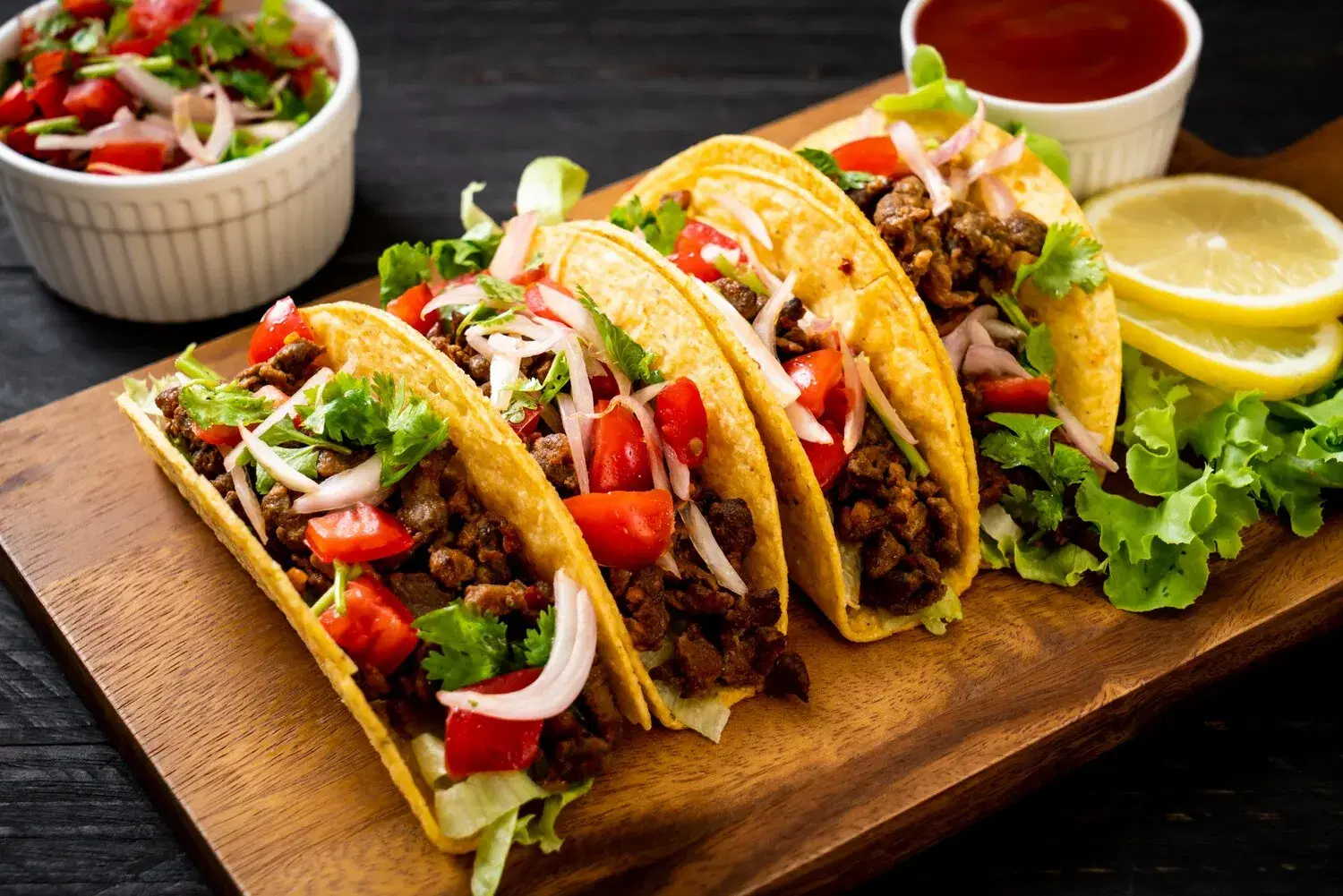

Tacos
Corn or wheat tortillas filled with various toppings, such as meat, vegetables, and sauces.
Nutrition Facts
* The % Daily Value (DV) tells you how much a nutrient in a serving of food contributes to a daily diet. 2,000 calories a day is used for general nutrition advice.
Premium Feature
No Similar Dishes Found
We couldn't find any similar dishes at the moment. Try exploring other restaurants!
The taco's history is complex and deeply rooted in Mexican culture. Its origins can be traced back to the pre-Hispanic era, where evidence suggests that a dish resembling tacos was consumed by the indigenous people of Mexico. The modern taco evolved over centuries, influenced by both indigenous ingredients and European colonization. The word 'taco' itself may refer to the paper-wrapped explosives used by silver miners in the 18th century, alluding to the 'stuffed' nature of the dish.
Premium Feature
Tacos are more than just food in Mexico; they are a fundamental part of the nation's cultural identity, social life, and culinary heritage. They represent a fusion of indigenous traditions and colonial influences, reflecting Mexico's rich history and diverse regional cuisines.
Street Food Staple
Tacos are ubiquitous street food, sold from countless stands and carts across Mexico. Taquerias are a central element of Mexican social life, often open late into the night and serving as gathering places for friends and families.
Regional Variations
Each region of Mexico boasts its own unique taco styles and fillings. For instance, Baja California is known for its fish tacos, while Oaxaca is famous for tasajo (thinly sliced beef) tacos.
Celebratory Food
Tacos are commonly served at parties, family gatherings, and celebrations. They are a versatile and inclusive food that can be enjoyed by people of all ages and backgrounds.
Cultural Symbolism
The simplicity and accessibility of tacos make them a symbol of Mexican resilience and ingenuity. They represent the ability to create a delicious and satisfying meal from humble ingredients.
Premium Feature
Tacos boast a diverse range of flavors, primarily a savory foundation with options for spicy, acidic, and sweet components, depending on the chosen fillings and salsas.
The primary flavor profile depends heavily on the filling. Common fillings like carne asada (grilled steak) offer a rich, beefy flavor. Al pastor (marinated pork) provides a sweet and tangy taste. Chicken fillings can range from mild and savory to intensely spicy. Vegetarian options often feature earthy beans, grilled vegetables, or mushrooms. Salsas add layers of heat, acidity, and freshness, ranging from mild tomato-based salsas to fiery habanero sauces. Lime juice is a common addition for brightness, while toppings like cilantro and onions contribute herbal and pungent notes, respectively.
Premium Feature
Warm Your Tortillas
Warming tortillas on a comal or skillet makes them pliable and prevents them from breaking when filled. A quick char adds a smoky flavor.
Use Quality Ingredients
The quality of your ingredients directly impacts the taste of your tacos. Opt for fresh, high-quality meats, vegetables, and salsas.
Don't Overfill
Resist the urge to overfill your tacos. A moderate amount of filling ensures that the tortilla doesn't tear and allows you to taste each ingredient individually.
Embrace Fresh Toppings
Fresh toppings like cilantro, onions, and lime juice add brightness and complexity to your tacos. Don't be afraid to experiment with different combinations.
Proper Salsa Selection
Choose salsas that complement your fillings. Mild salsas work well with delicate flavors, while spicier salsas can add heat and intensity to bolder fillings.
Premium Feature
Explore additional Tex-Mex dishes and restaurants
Explore Tex-MexDiscover top dining spots and culinary experiences in Campinas.
Explore CampinasLearn more about the food culture, restaurant scene, and culinary heritage of Brazil.
Explore Brazil