
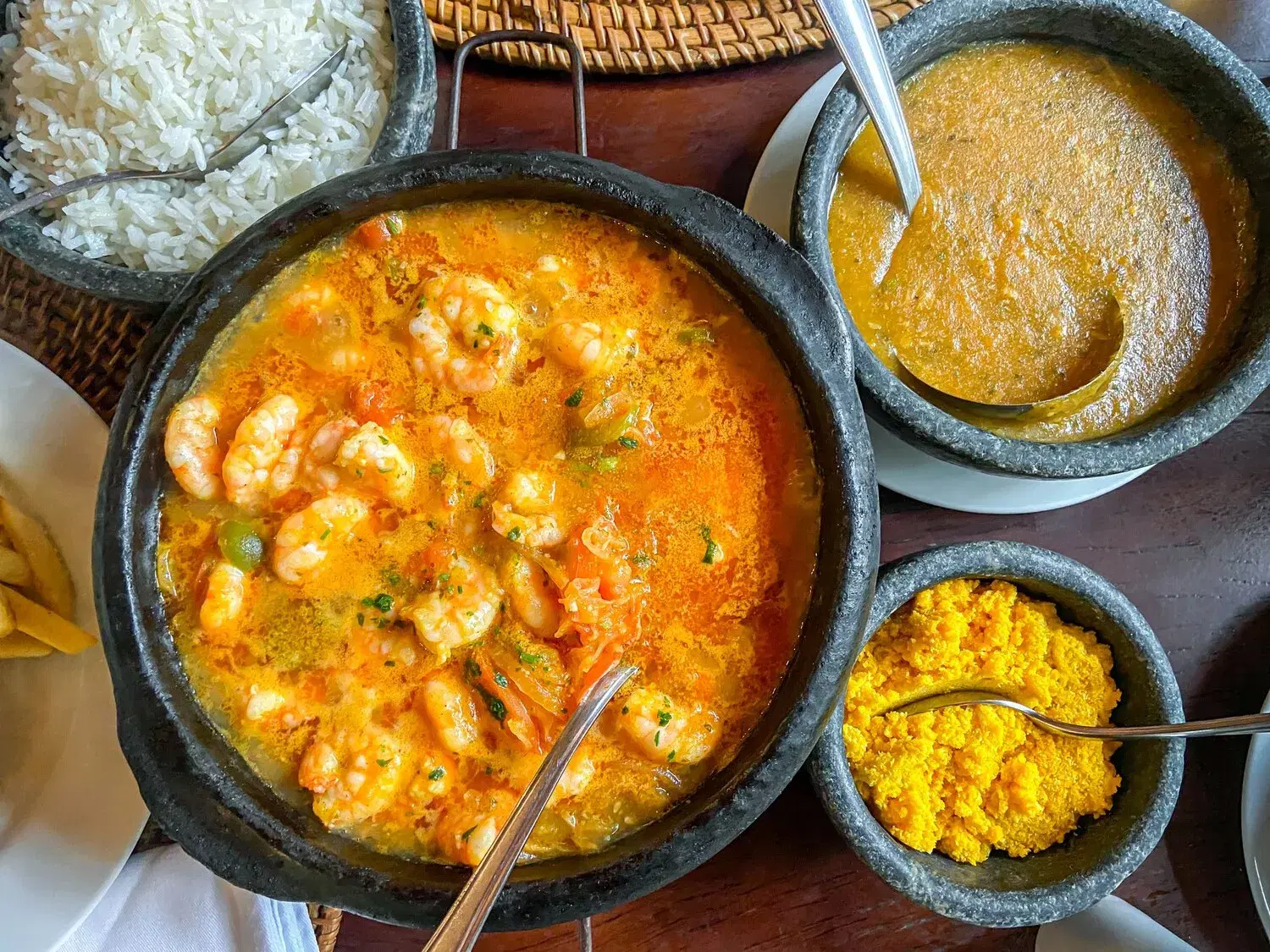

Moqueca Capixaba
Brazilian seafood stew with fish, tomatoes, onions, garlic, cilantro and annatto (urucum).
Nutrition Facts
* The % Daily Value (DV) tells you how much a nutrient in a serving of food contributes to a daily diet. 2,000 calories a day is used for general nutrition advice.
Premium Feature
Beth Bistro e Restaurante
Premium Feature
Moqueca Capixaba has its roots in the indigenous culinary traditions of the Espírito Santo region of Brazil, incorporating ingredients and techniques used by the native peoples. Over time, it was influenced by Portuguese colonization and African culinary practices brought by enslaved people, resulting in the unique blend of flavors and methods that define the dish today. The absence of palm oil distinguishes it from the Bahia version, reflecting regional ingredient availability and preferences.
Premium Feature
Moqueca Capixaba is more than just a meal; it's a symbol of Espírito Santo's cultural identity and a staple of family gatherings and celebrations. It represents the region's connection to the sea and its rich culinary heritage.
Family Tradition
Moqueca Capixaba is often prepared and enjoyed in a communal setting, passed down through generations within families. The recipe and techniques are closely guarded secrets, varying slightly from household to household.
Regional Identity
The dish is a key part of the culinary identity of Espírito Santo, distinguishing it from other regions of Brazil. It is a point of pride for the local community, and its preparation is considered an art form.
Festive Occasions
Moqueca is frequently served during special occasions, such as family reunions, holidays, and religious festivals. It is a dish that brings people together and celebrates the region's bounty.
Premium Feature
Moqueca Capixaba offers a delicate and savory seafood experience, showcasing the freshness of fish and the subtle sweetness of tomatoes and onions, all enhanced by aromatic herbs and spices.
The predominant flavor is the fresh, clean taste of the fish (often sea bass, snapper, or swordfish), complemented by the sweetness of ripe tomatoes and onions. Garlic provides a pungent base note, while cilantro adds a bright, herbaceous aroma. Annatto (urucum) contributes a mild, earthy flavor and vibrant orange color. The absence of dendê oil (palm oil) allows the natural flavors of the ingredients to shine through, creating a lighter, more delicate stew than its Bahian counterpart. The broth is savory and subtly sweet, with a hint of acidity from the tomatoes.
Premium Feature
Fresh Fish is Key
The quality of the fish is paramount. Use the freshest available white fish, such as sea bass, snapper, or swordfish. The fish should be firm and have a mild, clean smell.
Gentle Cooking
Cook the moqueca over low heat to prevent the fish from toughening and the tomatoes from burning. The cooking process should be slow and gentle to allow the flavors to meld together.
Layering Flavors
Build the flavor gradually by layering the ingredients. Start with the onions and garlic, then add the tomatoes, peppers, and herbs. The fish should be added last to avoid overcooking.
Use a Clay Pot (if possible)
Traditionally, Moqueca Capixaba is cooked in a clay pot, which imparts a unique earthy flavor to the dish. While not essential, using a clay pot can enhance the authentic taste and presentation.
Premium Feature
Explore additional Seafood Stew dishes and restaurants
Explore Seafood StewDiscover top dining spots and culinary experiences in Itajai.
Explore ItajaiLearn more about the food culture, restaurant scene, and culinary heritage of Brazil.
Explore Brazil