
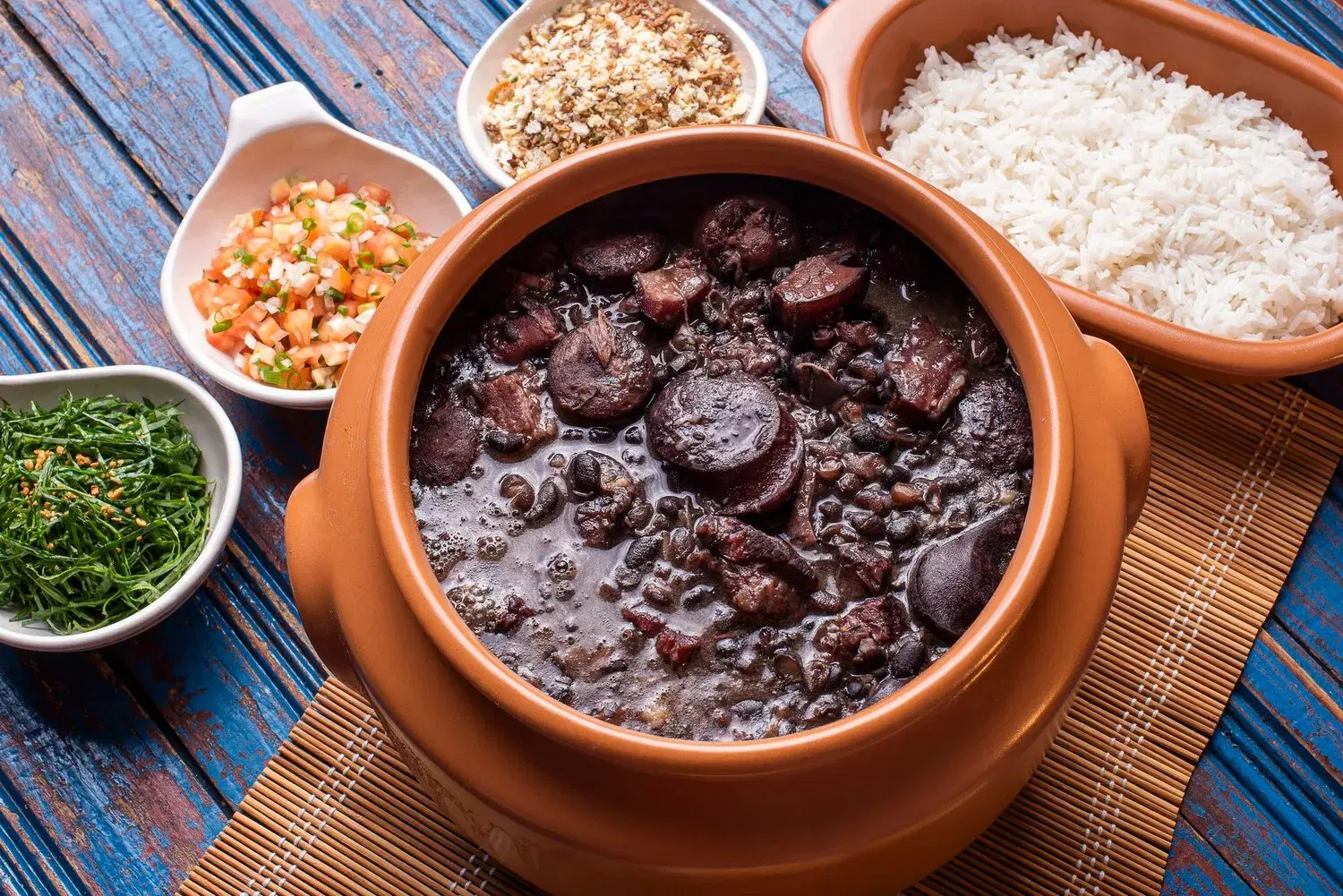

Feijoada
A traditional Brazilian black bean stew with various pork and beef cuts, often available on the buffet.
Nutrition Facts
* The % Daily Value (DV) tells you how much a nutrient in a serving of food contributes to a daily diet. 2,000 calories a day is used for general nutrition advice.
Premium Feature
Restaurante Cheiro Verde
Premium Feature
Feijoada's origins are debated, with theories ranging from a slave-era creation using discarded meat cuts to a more sophisticated dish evolving from Iberian stews. Regardless, it represents a blend of European and African culinary influences, becoming a symbol of Brazilian national identity.
Premium Feature
Feijoada is more than just a dish; it's a social and cultural event in Brazil. It's often enjoyed on weekends with family and friends, signifying togetherness and celebration.
Feijoada as a Social Event
Serving and eating feijoada is often an all-day affair, a social gathering where family and friends come together to share food, drink, and conversation. The preparation can be a collaborative effort, and the meal itself is leisurely and festive.
Regional Variations
While black beans and pork are fundamental, regional variations exist. Some regions might favor certain cuts of meat, add different spices, or serve it with specific accompaniments. For example, in some areas, oranges are considered a must-have side dish.
Symbol of National Identity
Feijoada is widely considered the national dish of Brazil, representing the country's diverse culinary heritage and the blending of cultures. It symbolizes Brazilian hospitality and the joy of sharing a meal.
Premium Feature
Feijoada boasts a rich, savory, and smoky flavor profile, with a complex interplay of salty pork, earthy black beans, and subtle spice notes.
The dominant flavor comes from the various cuts of pork, including salted pork belly (barriga), smoked sausages (linguiça), dried beef (carne seca), and sometimes pork ribs, feet, ears, and other less common parts. These meats impart a deep, savory umami flavor. The black beans provide an earthy, grounding base. Garlic, onions, bay leaves, and sometimes peppers contribute subtle aromatic complexity. The overall profile is rich, hearty, and intensely flavorful.
Premium Feature
Soaking the Beans
Soaking the black beans overnight (or for at least 6 hours) is crucial for tenderizing them and reducing cooking time. Discard the soaking water before cooking.
Desalting the Meats
Many of the pork cuts used in feijoada are heavily salted. Thoroughly desalting them by soaking in multiple changes of water over several hours (or overnight) is essential to prevent the dish from being overly salty.
Cooking Low and Slow
Feijoada benefits from slow cooking, allowing the flavors to meld and deepen. Simmering it gently for several hours will result in a more flavorful and tender dish.
Serving Accompaniments
Feijoada is traditionally served with accompaniments that complement its richness, such as white rice, collard greens (couve), farofa (toasted cassava flour), and orange slices. A chili sauce is also often served on the side.
Premium Feature
Explore additional Traditional dishes and restaurants
Explore TraditionalDiscover top dining spots and culinary experiences in Itajai.
Explore ItajaiLearn more about the food culture, restaurant scene, and culinary heritage of Brazil.
Explore Brazil