
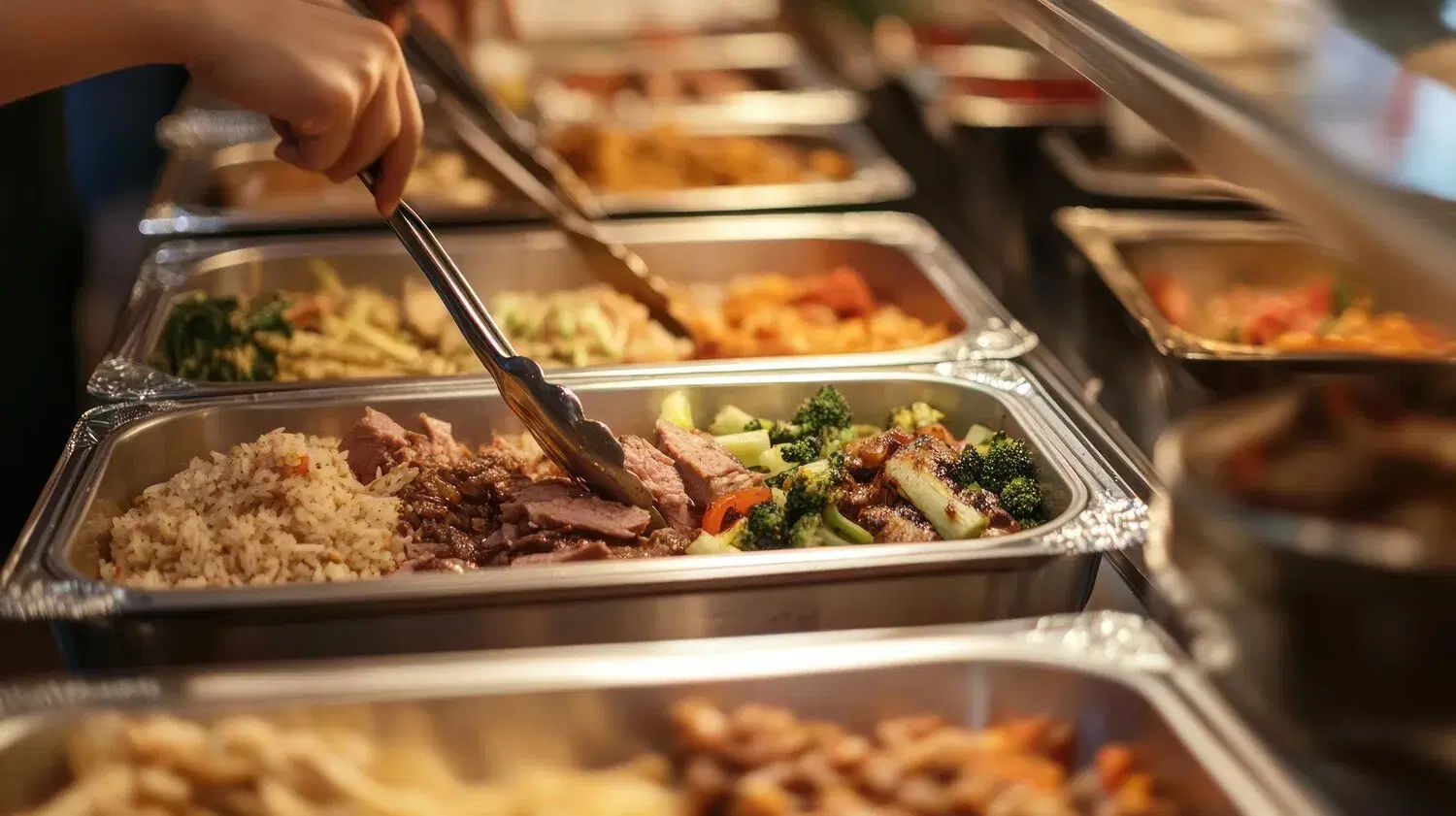

Self-Service Buffet
Restaurante Cheiro Verde is known for its varied self-service buffet, offering a selection of salads, hot dishes, and desserts.
Nutrition Facts
* The % Daily Value (DV) tells you how much a nutrient in a serving of food contributes to a daily diet. 2,000 calories a day is used for general nutrition advice.
Premium Feature
Restaurante Cheiro Verde
Premium Feature
Buffets, especially self-service ones, gained popularity in Brazil during the mid-20th century as a practical and affordable way to offer a wide variety of dishes to diverse palates. The concept likely drew inspiration from European and American buffet traditions, adapted to incorporate Brazilian ingredients and culinary styles. Restaurants like Cheiro Verde have refined this model, emphasizing fresh, healthy options.
Premium Feature
Self-service buffets are a common and accepted dining practice in Brazilian culture, representing a convenient and social way to enjoy a meal, especially during lunchtime. They cater to diverse tastes and dietary preferences, fostering a sense of community as people share a variety of foods.
Convenience and Variety
Brazilian buffets offer a wide range of options, catering to different tastes and dietary needs. This allows individuals to create a personalized meal according to their preferences.
Lunchtime Tradition
Buffets are particularly popular during lunchtime, providing a quick and efficient way for workers and students to enjoy a substantial meal.
Social Gathering
Buffets often serve as a venue for social gatherings, allowing people to share a meal and connect with friends, family, or colleagues.
Premium Feature
The flavor profile of a Brazilian self-service buffet is diverse, representing a spectrum of tastes from savory to sweet, and mild to spicy. It typically includes a balance of fresh vegetables, grains, proteins, and local spices.
Salads often feature crisp lettuce, tomatoes, cucumbers, carrots, beets, and sometimes tropical fruits like mango or pineapple. Hot dishes can include rice, beans (various types), feijoada (black bean stew with meats), grilled meats (beef, chicken, sausage), fish, pasta, and vegetable stews. Desserts typically include fruit salads, puddings, cakes, and mousse. Common Brazilian spices and herbs used include garlic, onion, parsley, cilantro, paprika, and chili peppers. The aim is to offer something for everyone.
Premium Feature
Start with Salads
Begin with lighter options like salads to avoid feeling full quickly and to ensure you get a good serving of fresh vegetables.
Observe Hygiene
Pay attention to the overall cleanliness of the buffet area. Look for fresh, well-maintained food and clean serving utensils.
Portion Control
Take smaller portions to try a variety of dishes without overeating. You can always go back for more of what you enjoy.
Consider Temperature
Check that hot foods are steaming and cold foods are chilled. This helps ensure food safety.
Premium Feature
Explore additional Buffet dishes and restaurants
Explore BuffetDiscover top dining spots and culinary experiences in Itajai.
Explore ItajaiLearn more about the food culture, restaurant scene, and culinary heritage of Brazil.
Explore Brazil