
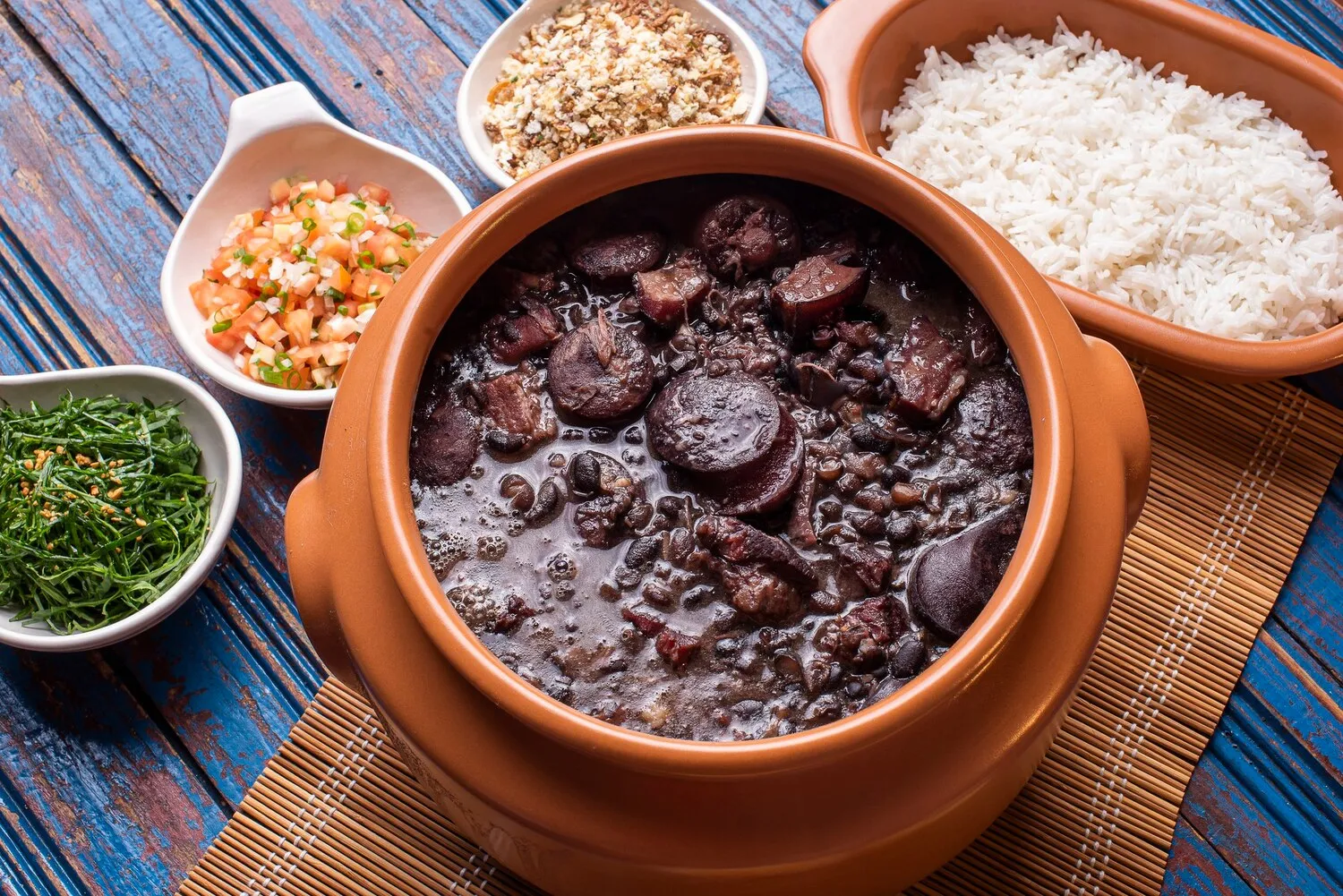

Feijoada
Traditional Brazilian black bean stew with various cuts of pork, sausage and beef.
Nutrition Facts
* The % Daily Value (DV) tells you how much a nutrient in a serving of food contributes to a daily diet. 2,000 calories a day is used for general nutrition advice.
Premium Feature
Premium Feature
Feijoada's origins are debated, with some believing it originated among enslaved Africans who combined leftover pork scraps with black beans. Others trace its roots to European stews, adapted with local ingredients. Regardless, it evolved into a national dish representing a fusion of cultures and culinary traditions.
Premium Feature
Feijoada is more than just a dish; it is a symbol of Brazilian culture, community, and national identity. It is traditionally enjoyed on weekends, bringing families and friends together for a communal meal.
Social Gathering
Feijoada is typically served as a communal meal, fostering a sense of togetherness and celebration. Preparing and sharing feijoada is an important social ritual.
National Dish
Feijoada is widely considered the national dish of Brazil, representing the country's diverse cultural heritage and culinary traditions.
Carnival Tradition
While enjoyed year-round, Feijoada often features prominently in Carnival celebrations, providing sustenance and energy for the festivities.
Regional Variations
Although the core ingredients remain consistent, regional variations of feijoada exist throughout Brazil, reflecting local tastes and available ingredients.
Premium Feature
Feijoada is a rich, savory, and smoky stew with a complex flavor profile derived from black beans, various cuts of pork, sausage, and beef. Garlic, onions, bay leaves, and smoked paprika add depth and warmth.
The primary flavor is a deep, earthy, and savory black bean base, enhanced by the salty and fatty richness of different pork cuts like bacon, smoked ribs, and dried beef (carne seca). Sausages, such as linguica and paio, contribute smoky and spicy notes. The aromatics—garlic, onion, and bay leaf—provide a fragrant backdrop. Smoked paprika adds further smokiness and a hint of sweetness. The combination creates a hearty, comforting, and umami-rich experience.
Premium Feature
Bean Soaking
Soak the black beans overnight (or for at least 8 hours) to soften them and reduce cooking time. This also helps remove some of the phytic acid, making them easier to digest.
Meat Desalting
If using salted or dried meats like carne seca or salted pork belly, desalinate them by soaking in multiple changes of water for several hours (or overnight) to remove excess salt.
Low and Slow Cooking
Cook the feijoada on low heat for several hours, allowing the flavors to meld and the meats to become tender. A slow cooker or Dutch oven is ideal for this purpose.
Skimming the Fat
Skim off excess fat from the surface of the stew during cooking to prevent it from becoming too greasy. This also helps to clarify the broth.
Traditional Accompaniments
Serve Feijoada with traditional accompaniments such as white rice, collard greens (couve), farofa (toasted cassava flour), and orange slices to balance the richness and provide textural contrast.
Premium Feature
Explore additional Traditional Dish dishes and restaurants
Explore Traditional DishDiscover top dining spots and culinary experiences in Itú.
Explore ItúLearn more about the food culture, restaurant scene, and culinary heritage of Brazil.
Explore Brazil