
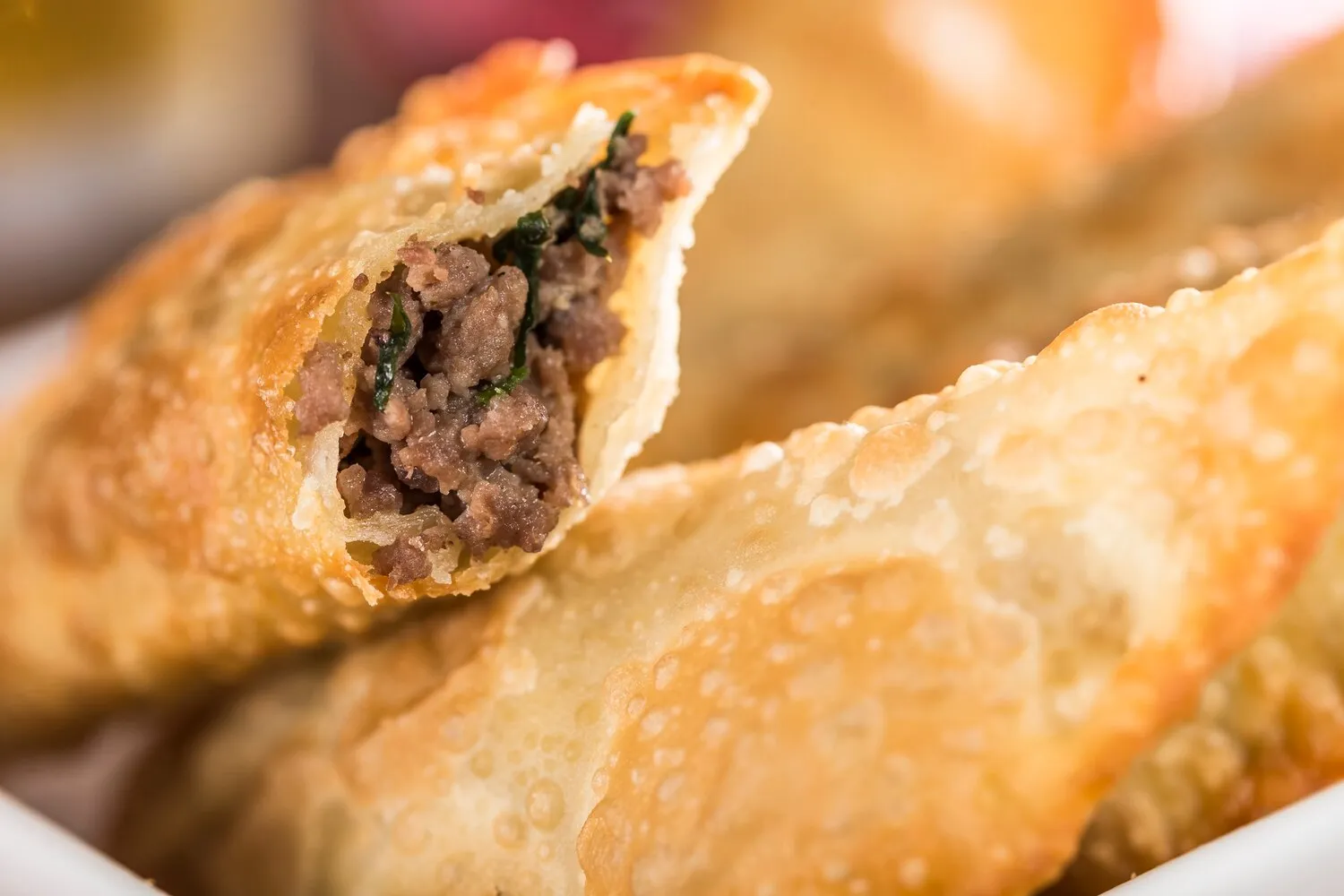

Pastel
One of the most popular option in the restaurant.
Nutrition Facts
* The % Daily Value (DV) tells you how much a nutrient in a serving of food contributes to a daily diet. 2,000 calories a day is used for general nutrition advice.
Premium Feature
Vardeco
Premium Feature
Pastéis are believed to have originated from Chinese egg rolls and Japanese spring rolls brought to Brazil by immigrants. They were adapted with local ingredients and quickly became a popular street food.
Premium Feature
Pastel is deeply ingrained in Brazilian culture, particularly as a ubiquitous street food and fair food.
Street Food Staple
Pastel is a common sight at street markets (feiras), fairs, and even outside of stadiums. It's a quick, affordable, and satisfying snack enjoyed by people from all walks of life.
Feira Culture
The combination of pastel and caldo de cana (sugar cane juice) is a classic pairing at Brazilian feiras. This tradition represents a quintessential Brazilian culinary experience.
Regional Variations
While the basic concept of a deep-fried pastry with savory filling remains consistent, regional variations exist in terms of preferred fillings and dough recipes.
Premium Feature
The flavor profile of pastel is savory and often rich, with a crispy, deep-fried exterior contrasting the diverse fillings.
The fillings can range from classic ground beef (carne) to cheese (queijo), heart of palm (palmito), chicken (frango), shrimp (camarão), and even sweet options like guava paste and cheese (romeu e julieta). The dough is typically made from wheat flour, water, and cachaça or vinegar, which contributes to its blistered, crispy texture when fried. The deep frying process gives the pastel a characteristic oily richness.
Premium Feature
Dough Crispiness
Adding cachaça or vinegar to the dough helps prevent gluten development, resulting in a crispier texture when fried.
Oil Temperature
Maintaining the correct oil temperature (around 350-375°F or 175-190°C) is crucial for achieving a golden brown, crispy exterior without burning the pastel.
Filling Consistency
Ensure the filling is not too wet to prevent the dough from becoming soggy. Drain any excess liquid from the filling before assembling the pastéis.
Serving Immediately
Pastéis are best enjoyed immediately after frying while they are still hot and crispy. They tend to lose their texture as they cool down.
Premium Feature
Explore additional Pastel dishes and restaurants
Explore PastelDiscover top dining spots and culinary experiences in Jundiaí.
Explore JundiaíLearn more about the food culture, restaurant scene, and culinary heritage of Brazil.
Explore Brazil