
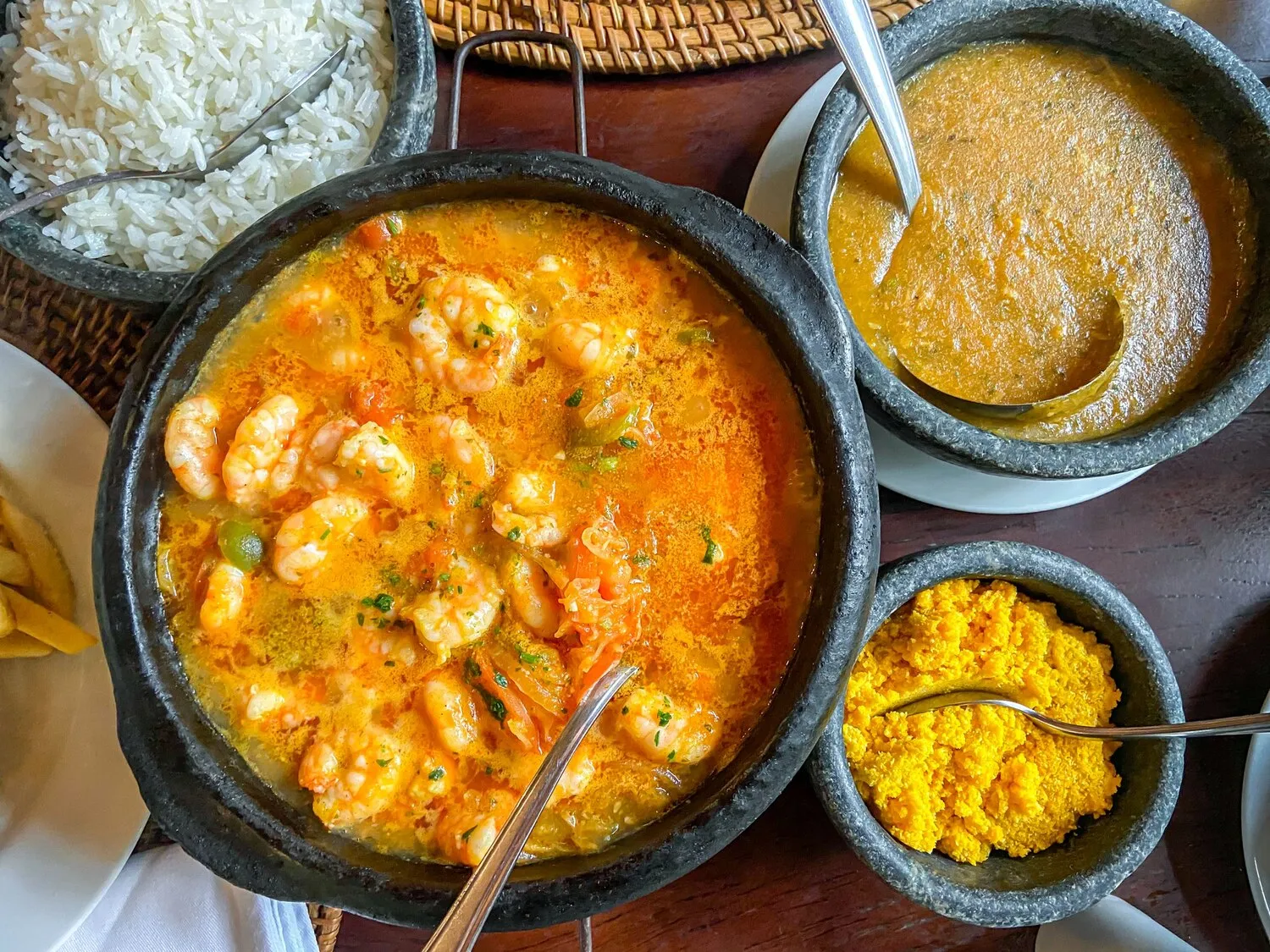

Moqueca Capixaba
Fish stew cooked in a clay pot with tomatoes, onions, and cilantro.
Nutrition Facts
* The % Daily Value (DV) tells you how much a nutrient in a serving of food contributes to a daily diet. 2,000 calories a day is used for general nutrition advice.
Premium Feature
Premium Feature
Moqueca's origins trace back to indigenous cooking methods, which were later influenced by Portuguese and African culinary traditions. The indigenous people of Brazil used clay pots to cook fish with local ingredients. The arrival of the Portuguese brought olive oil and onions, while enslaved Africans contributed techniques and ingredients that shaped the dish into what it is today.
Premium Feature
Moqueca Capixaba is a central dish in the cuisine and culture of the Espírito Santo state in Brazil. It represents family gatherings, celebrations, and the region's coastal identity.
Family Tradition
Moqueca is often prepared and enjoyed during family meals, representing a connection to heritage and shared experiences. Recipes are often passed down through generations.
Regional Identity
The dish is a symbol of Espírito Santo's coastal culture, reflecting the importance of seafood and local ingredients in the region's culinary identity. It’s a source of regional pride.
Festive Occasions
Moqueca is often served during special occasions and celebrations, signifying abundance and joy. It is a dish meant to be shared.
Premium Feature
Moqueca Capixaba offers a delicate and savory flavor profile, defined by the sweetness of the fish, the acidity of tomatoes, the aromatic qualities of onions and cilantro, and the richness of olive oil.
The fish provides a mild, slightly sweet base flavor, which is complemented by the bright acidity of ripe tomatoes. Onions contribute a subtle sweetness and pungent aroma, while cilantro adds a fresh, herbaceous note. Olive oil imparts a rich, smooth texture and a subtle, fruity flavor. The absence of dendê oil (palm oil) distinguishes it from its Bahian counterpart and contributes to its lighter taste.
Premium Feature
Fresh Ingredients are Key
Use the freshest fish available, ideally a firm white fish like grouper, sea bass, or snapper. The quality of the tomatoes, onions, and cilantro also significantly impacts the final flavor.
Clay Pot Cooking
Cooking the moqueca in a traditional clay pot (panela de barro) imparts a unique earthy flavor and helps distribute heat evenly, essential for the stew to develop its characteristic taste and texture. The clay pot should be cured before first use.
Low and Slow
Cook the moqueca over low heat to allow the flavors to meld and prevent the fish from overcooking. Patience is key to achieving the desired tenderness and richness.
Layering Flavors
Layer the ingredients in the pot, starting with onions and tomatoes, followed by the fish, and finishing with more tomatoes, onions, and cilantro. This allows the flavors to infuse evenly throughout the cooking process.
Premium Feature
Explore additional Stew dishes and restaurants
Explore StewDiscover top dining spots and culinary experiences in Niterói.
Explore NiteróiLearn more about the food culture, restaurant scene, and culinary heritage of Brazil.
Explore Brazil