
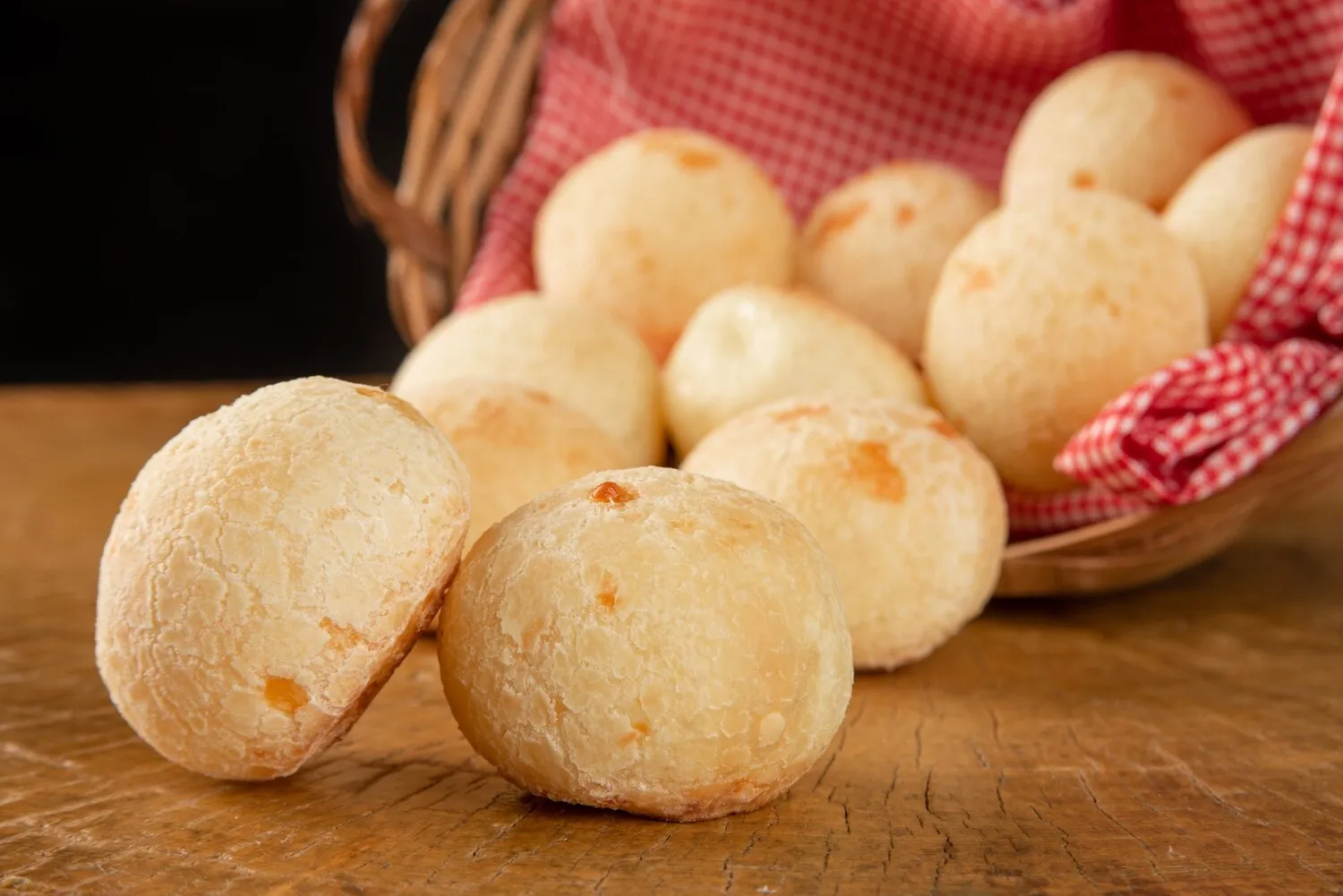

Pão de Queijo
Typical Brazilian cheese bread, a popular choice.
Nutrition Facts
* The % Daily Value (DV) tells you how much a nutrient in a serving of food contributes to a daily diet. 2,000 calories a day is used for general nutrition advice.
Premium Feature
Casa de Helena Café
Premium Feature
The precise origins of Pão de Queijo are somewhat debated, but it's generally believed to have emerged in the state of Minas Gerais during the 18th century. Contributing factors include the abundance of milk and cheese production in the region, the availability of cassava starch (polvilho), and a lack of wheat flour which made making regular bread challenging. The dish was initially associated with rural areas and slowly gained popularity throughout Brazil.
Premium Feature
Pão de Queijo is deeply ingrained in Brazilian culture, particularly in Minas Gerais. It's a staple food, enjoyed at any time of day, from breakfast to afternoon snacks. It represents Brazilian hospitality and is often offered to guests as a welcoming gesture.
Everyday Staple
Pão de Queijo is a ubiquitous snack and breakfast item, sold in bakeries, cafes, and even street vendors across Brazil. It's a quick, affordable, and satisfying option for many.
Minas Gerais Identity
The dish is particularly associated with the state of Minas Gerais, often considered its culinary heartland. Many Brazilians see Pão de Queijo as a symbol of Minas Gerais culture and cuisine.
Social Gatherings
Pão de Queijo is a common food to share during social gatherings with family and friends. It brings people together and fosters a sense of community.
Premium Feature
Pão de Queijo boasts a unique combination of cheesy, tangy, and slightly chewy flavors. The use of cassava starch gives it a characteristic texture and mild tang, while the cheese provides a savory and rich taste.
The dominant flavor is undeniably cheesy, stemming from the blend of cheeses used, traditionally including Minas cheese (a fresh Brazilian cheese). The polvilho (cassava starch) contributes a subtle sourness or tanginess, alongside a unique chewiness, that perfectly complements the cheese. Some variations include parmesan or other aged cheeses for a sharper, more pronounced flavor profile. Milk, oil, and eggs bind the ingredients and add richness to the dough.
Premium Feature
Choosing the Right Polvilho
There are two types of cassava starch: sweet (doce) and sour (azedo). Sour polvilho gives the Pão de Queijo its characteristic tangy flavor and chewy texture, while sweet polvilho provides a milder taste and softer consistency. A blend of both is often preferred.
Cheese Selection
Traditionally, Minas cheese is used, but if unavailable, a combination of mild cheeses like mozzarella and parmesan can be used as substitutes to achieve a similar flavor profile.
Oven Temperature
Baking at a high temperature initially helps the Pão de Queijo puff up. Then reduce heat to ensure that the inside is cooked through properly without burning the outside.
Freezing for Later
Pão de Queijo dough can be frozen for up to 3 months. Freeze the formed balls on a baking sheet before transferring them to a freezer bag for storage. Bake directly from frozen, adding a few minutes to the baking time.
Premium Feature
Explore additional Snack dishes and restaurants
Explore SnackDiscover top dining spots and culinary experiences in Niterói.
Explore NiteróiLearn more about the food culture, restaurant scene, and culinary heritage of Brazil.
Explore Brazil