
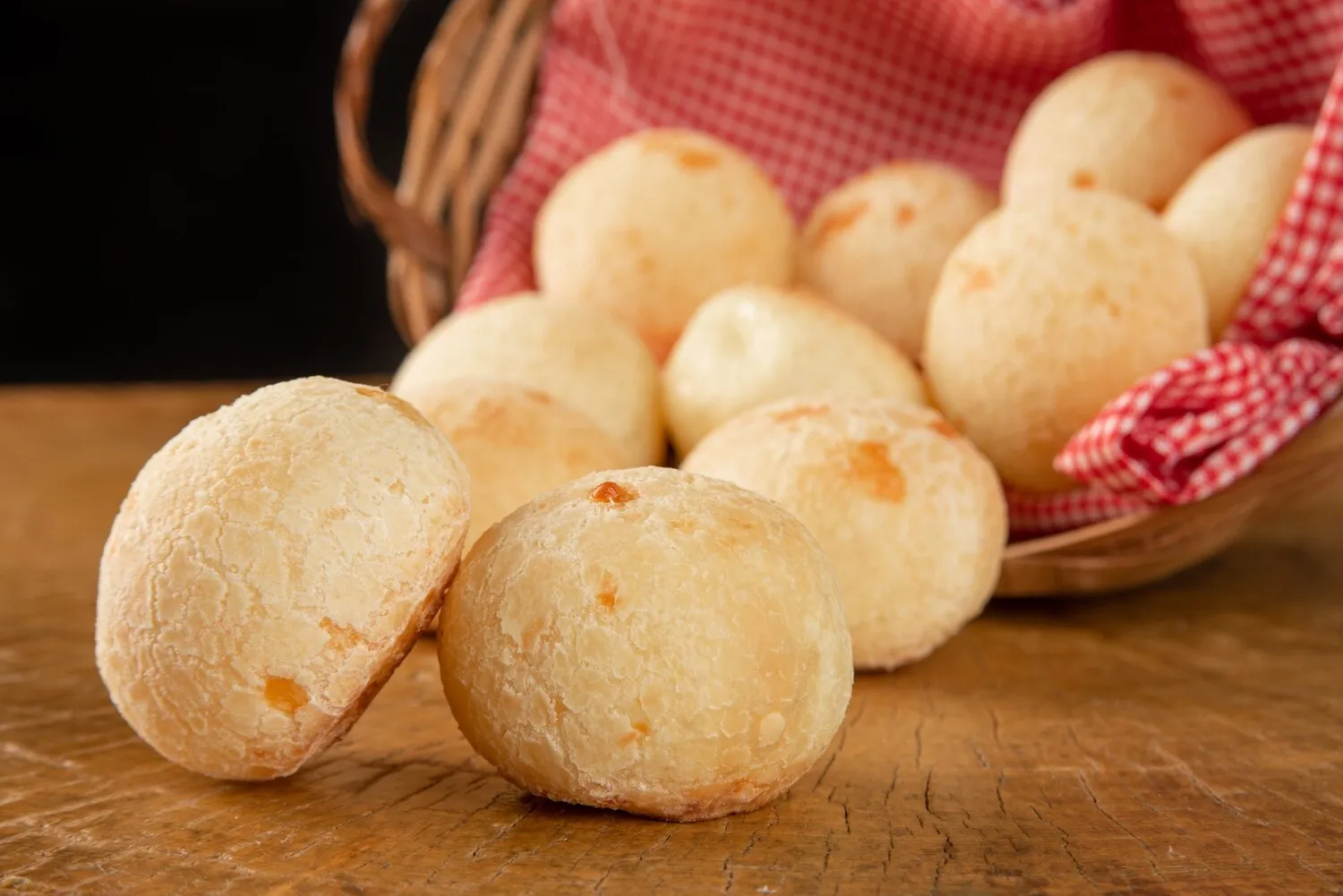

Pão de Queijo
Traditional Brazilian cheese bread, often mentioned in reviews as a must-try item.
Nutrition Facts
* The % Daily Value (DV) tells you how much a nutrient in a serving of food contributes to a daily diet. 2,000 calories a day is used for general nutrition advice.
Premium Feature
Noelia's Bistro e Padaria Gourmet
Premium Feature
The precise origins of Pão de Queijo are somewhat debated, but it's generally believed to have originated in the state of Minas Gerais, Brazil, during the 18th century. The rise of cattle ranching in the region led to an abundance of cheese, while the availability of cassava (tapioca) starch, a staple ingredient, provided the foundation for the recipe. Enslaved Africans likely played a crucial role in developing and refining the recipe, using their culinary skills and knowledge to transform simple ingredients into a delicious and nutritious food source.
Premium Feature
Pão de Queijo is deeply ingrained in Brazilian culture, particularly in Minas Gerais, where it's considered a staple food and a symbol of hospitality.
Breakfast Staple
Pão de Queijo is a common breakfast item throughout Brazil, often enjoyed with coffee. It's readily available in bakeries, cafes, and supermarkets.
Social Gathering Food
It's frequently served at social gatherings, parties, and family events, showcasing Brazilian hospitality and culinary traditions.
Regional Pride
In Minas Gerais, Pão de Queijo holds a special place in the regional identity. Local variations and family recipes are highly valued and passed down through generations.
Premium Feature
Pão de Queijo boasts a unique combination of savory, cheesy, and slightly tangy flavors, with a delightful chewy texture.
The flavor profile is dominated by the blend of cheeses used, which often includes a combination of Minas cheese (a fresh, mild Brazilian cheese), Parmesan, and sometimes mozzarella. The tapioca starch provides a subtle tang and a characteristic chewy texture. Butter or oil adds richness, and the eggs bind the ingredients together, contributing to a slightly eggy flavor. The overall result is a savory and satisfying flavor that is both comforting and addictive.
Premium Feature
Use the Right Cheese
The type and quality of cheese are crucial. Minas cheese is traditional, but a combination of cheeses, including Parmesan and a melting cheese like mozzarella, can enhance the flavor and texture. Experiment with different cheese ratios to find your preference.
Scald the Tapioca Starch
Scalding the tapioca starch with hot milk or water before adding the other ingredients helps to gelatinize the starch, contributing to the characteristic chewy texture of Pão de Queijo.
Don't Overmix
Overmixing can develop the gluten in the tapioca starch, leading to a tougher texture. Mix the ingredients just until combined.
Freeze for Later
Pão de Queijo dough can be frozen before baking. Shape the dough into balls and freeze them on a baking sheet. Once frozen, transfer them to a freezer bag for longer storage. Bake directly from frozen, adding a few extra minutes to the baking time.
Premium Feature
Explore additional Bakery item dishes and restaurants
Explore Bakery itemDiscover top dining spots and culinary experiences in Niterói.
Explore NiteróiLearn more about the food culture, restaurant scene, and culinary heritage of Brazil.
Explore Brazil