
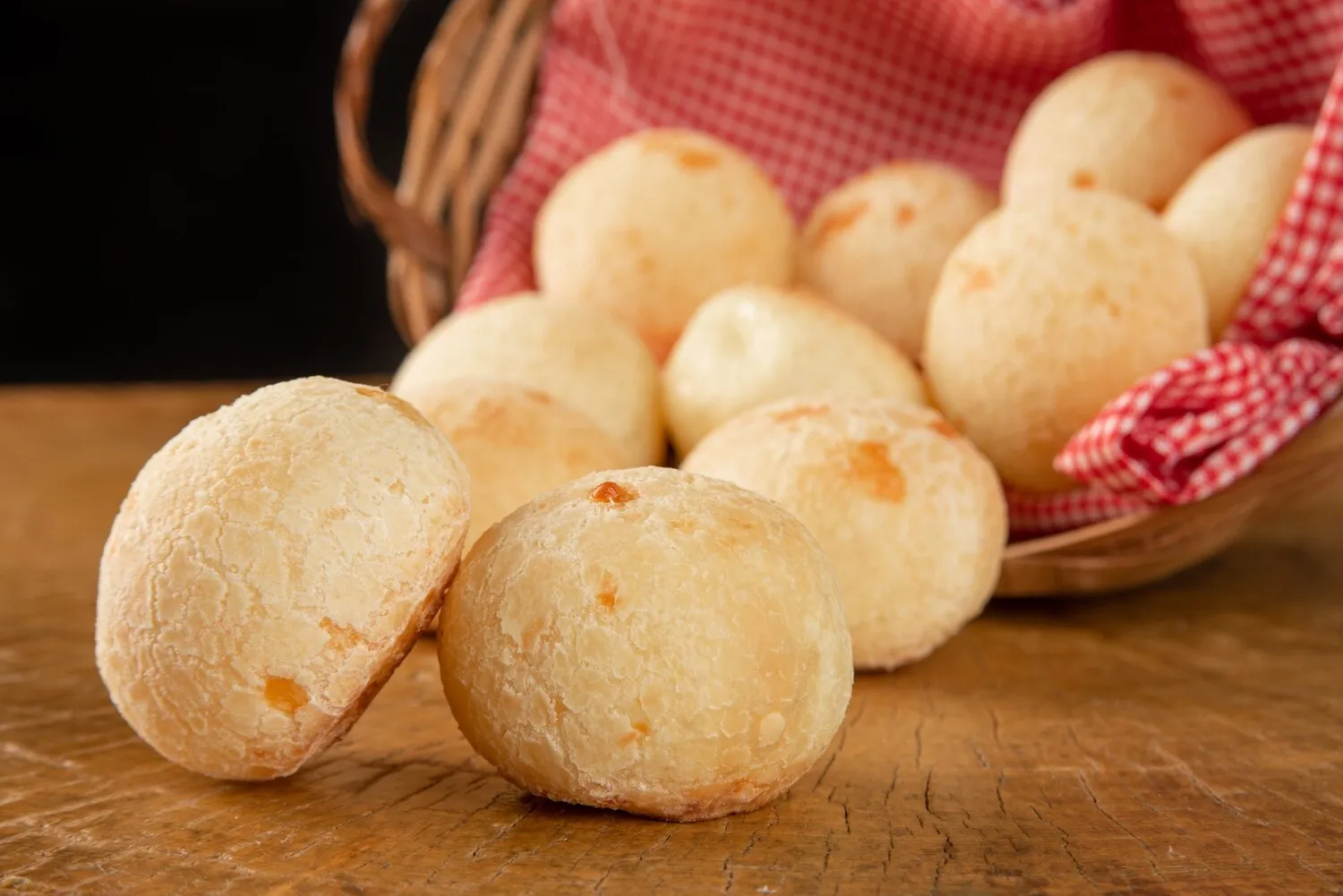

Pão de Queijo
Traditional Brazilian cheese bread.
Nutrition Facts
* The % Daily Value (DV) tells you how much a nutrient in a serving of food contributes to a daily diet. 2,000 calories a day is used for general nutrition advice.
Premium Feature
Torrado e Moído
Premium Feature
The precise origins of Pão de Queijo are debated, but it's believed to have emerged in the state of Minas Gerais during the 18th century. The abundance of cheese and manioc flour, combined with limited wheat availability, likely led to its creation. Some theories suggest it originated from enslaved Africans, who adapted recipes using available ingredients. Others point to the influence of Portuguese cuisine and the use of cheese-making techniques brought by European immigrants.
Premium Feature
Pão de Queijo is deeply ingrained in Brazilian culture, particularly in Minas Gerais. It represents hospitality, comfort food, and a connection to the region's agricultural heritage.
Breakfast Staple
Pão de Queijo is a common breakfast item throughout Brazil, often enjoyed with coffee.
Social Gathering Snack
It's a popular snack served at social gatherings, parties, and cafes.
Regional Pride
In Minas Gerais, Pão de Queijo is a source of regional pride and culinary identity.
Symbol of Hospitality
Offering Pão de Queijo to guests is a common gesture of hospitality.
Premium Feature
Pão de Queijo offers a unique blend of savory, cheesy, and slightly tangy flavors, with a subtle chewiness that distinguishes it from other breads.
The dominant flavor is undoubtedly the cheese, which varies depending on the type used. Minas cheese is traditional, lending a mild, slightly acidic tang. Other cheeses like Parmesan or mozzarella can add a saltier, richer profile. The tapioca flour (polvilho doce or azedo) contributes a characteristic chewiness and a subtle sourness, particularly if using polvilho azedo (sour tapioca starch). Eggs provide richness and bind the ingredients together. The overall flavor profile is savory and satisfying, making it a popular snack or breakfast item.
Premium Feature
Polvilho Choice
Using a combination of sweet (doce) and sour (azedo) tapioca starch creates the desired texture and flavor. Experiment with the ratio to find your preference.
Cheese Quality
Use high-quality cheese for the best flavor. Minas cheese is traditional, but other cheeses like Parmesan, mozzarella, or Gruyere can be used or combined.
Hot Liquid
Scalding the tapioca flour with hot liquid (milk, water, or oil) is crucial for achieving the signature chewiness.
Mixing Technique
Mix the dough thoroughly to ensure the ingredients are well combined. The dough should be sticky.
Baking Temperature
Bake at a high temperature to create a crispy exterior and a soft, chewy interior.
Freezing
Pão de Queijo can be frozen before baking. Bake from frozen, adding a few extra minutes to the baking time.
Premium Feature
Explore additional Snack dishes and restaurants
Explore SnackDiscover top dining spots and culinary experiences in Niterói.
Explore NiteróiLearn more about the food culture, restaurant scene, and culinary heritage of Brazil.
Explore Brazil