
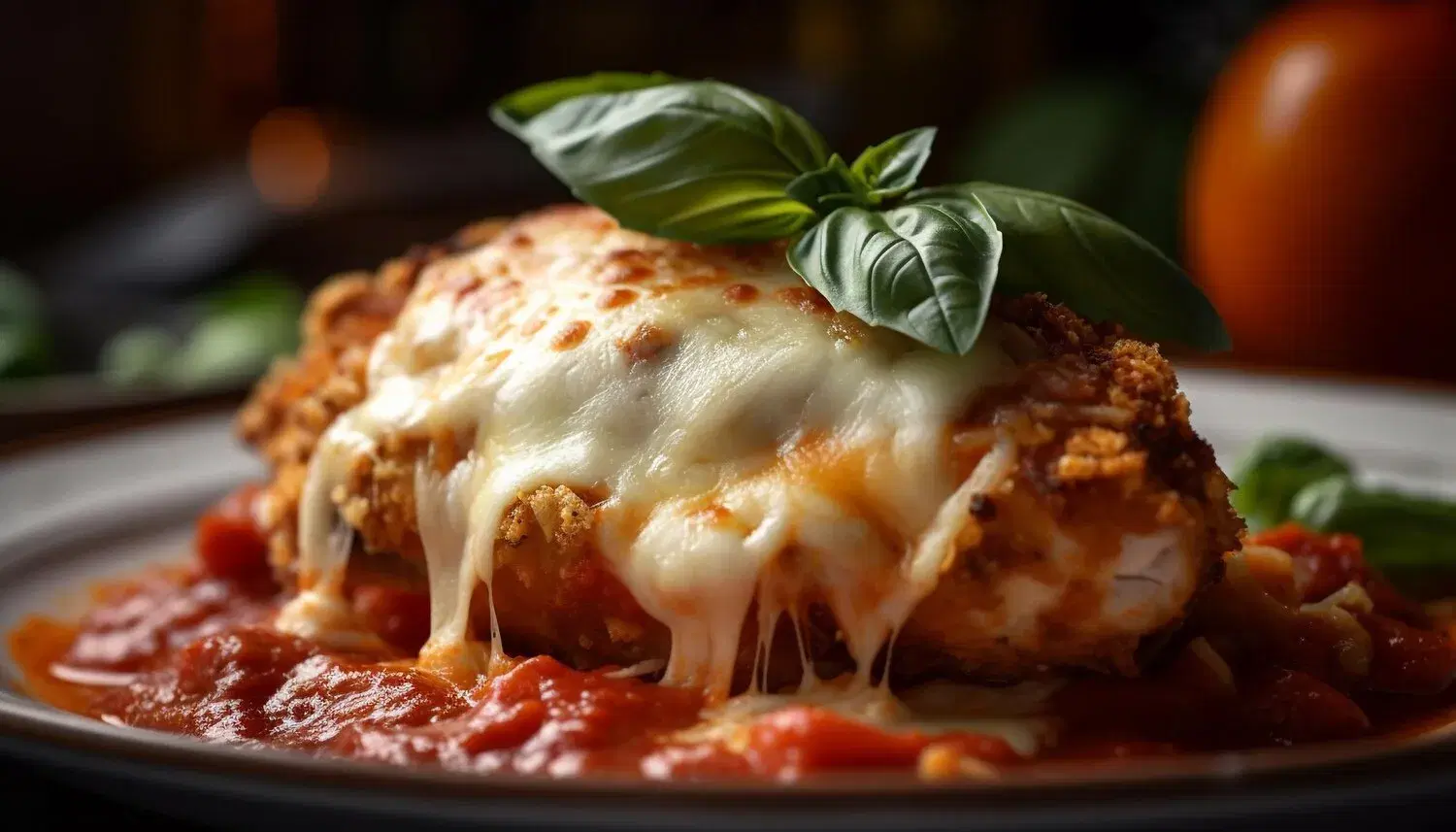

Parmegiana
Breaded steak or chicken fillet, topped with tomato sauce and melted cheese.
Nutrition Facts
* The % Daily Value (DV) tells you how much a nutrient in a serving of food contributes to a daily diet. 2,000 calories a day is used for general nutrition advice.
Premium Feature
Pavanelli Ristorante
Premium Feature
The precise origins of Parmigiana are debated, with claims from Campania, Sicily, and Parma. What's certain is that it evolved from simpler eggplant dishes popular in Southern Italy and incorporated elements from Arabic and Spanish culinary traditions. The use of tomatoes, brought from the Americas, significantly influenced its development.
Premium Feature
Parmigiana is a staple of Italian cuisine, deeply embedded in regional culinary traditions and family meals. It represents comfort food, often prepared and enjoyed during gatherings and celebrations.
Regional Variations
Parmigiana exists in several regional variations, with eggplant being the most common base (Parmigiana di Melanzane). However, some regions use chicken or veal (Parmigiana di Pollo or Parmigiana di Vitello, respectively), although these are more frequently found in Italian-American cuisine.
Family Traditions
Parmigiana is often a dish passed down through generations, with each family having their own secret recipe and variations. Its preparation is often a shared activity, especially during holidays.
Sunday Lunch
In many Italian families, Parmigiana is a traditional dish served during Sunday lunch, a time for family to come together and enjoy a hearty meal.
Premium Feature
Parmigiana is a symphony of rich, savory, and slightly sweet flavors, primarily driven by the combination of fried eggplant, tangy tomato sauce, and creamy melted cheese.
The eggplant, typically fried until golden brown and slightly crispy, provides a hearty and earthy base. The tomato sauce, made with fresh or canned tomatoes, garlic, basil, and oregano, adds a vibrant acidity and sweetness. The cheese, usually mozzarella, parmesan, or a combination, contributes a creamy, salty, and slightly nutty richness that binds all the flavors together. The breading, when used, adds texture and a subtle savory element.
Premium Feature
Eggplant Preparation
Salt the eggplant slices before frying to draw out excess moisture and prevent them from becoming soggy. This also enhances their flavor.
Tomato Sauce Quality
Use high-quality canned tomatoes or fresh, ripe tomatoes for the sauce. Simmer the sauce for a sufficient amount of time to allow the flavors to meld and develop.
Cheese Selection
Use a combination of mozzarella for its meltiness and parmesan for its sharp, salty flavor. Fresh mozzarella is preferable, but low-moisture mozzarella can also be used.
Layering Technique
Layer the ingredients carefully, starting with a thin layer of sauce on the bottom of the baking dish. Alternate layers of eggplant, sauce, and cheese, finishing with a generous layer of cheese on top. This ensures even distribution of flavors.
Premium Feature
Explore additional Classic Italian dishes and restaurants
Explore Classic ItalianDiscover top dining spots and culinary experiences in Piracicaba.
Explore PiracicabaLearn more about the food culture, restaurant scene, and culinary heritage of Brazil.
Explore Brazil