
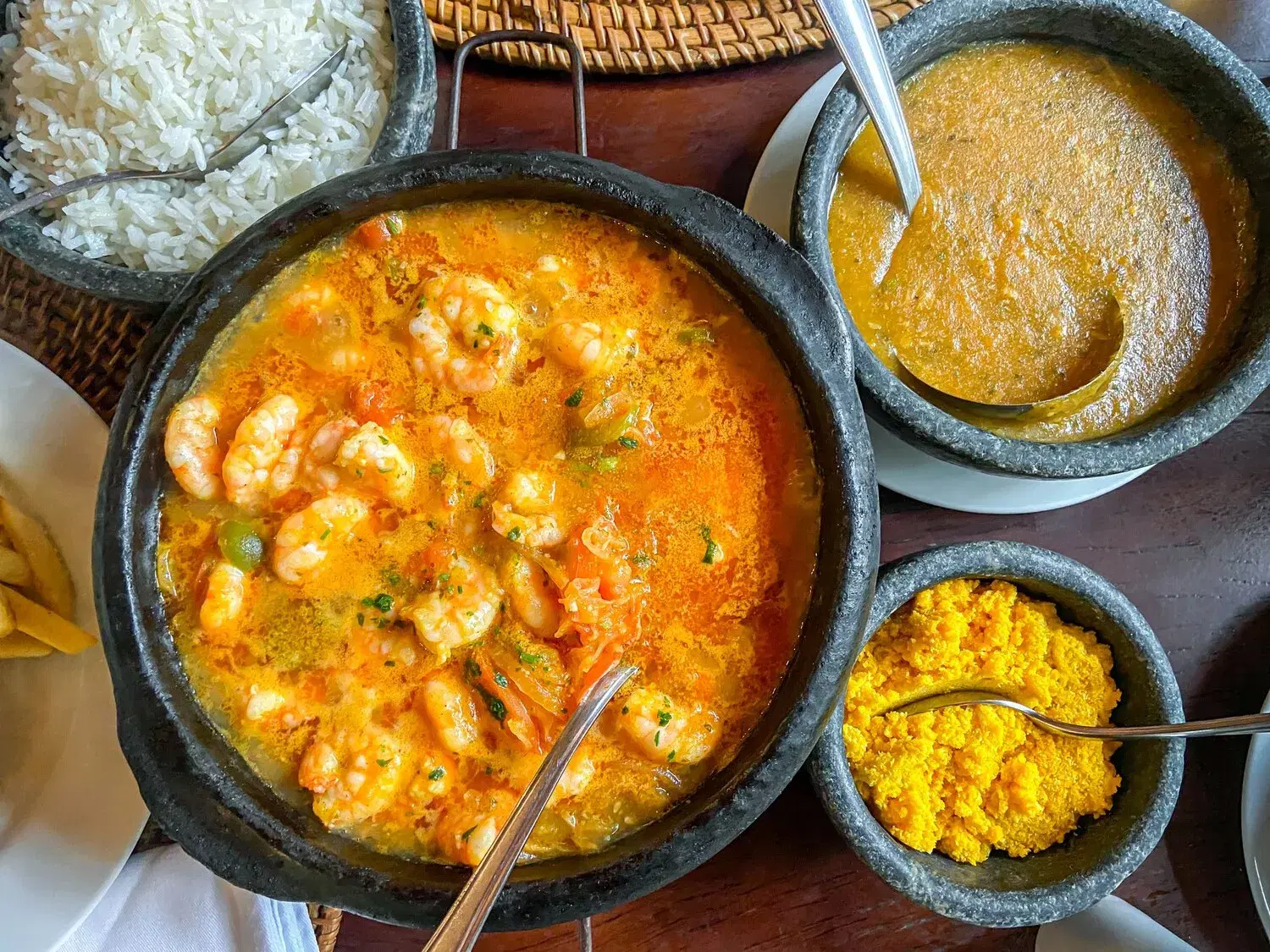

Moqueca Capixaba
A traditional Brazilian seafood stew from the Espírito Santo region, typically prepared with fish, shrimp, coconut milk, tomatoes, onions, and cilantro. It's usually served with rice and pirão (a creamy manioc flour porridge).
Nutrition Facts
* The % Daily Value (DV) tells you how much a nutrient in a serving of food contributes to a daily diet. 2,000 calories a day is used for general nutrition advice.
Premium Feature
Porto da Praia
Premium Feature
Moqueca Capixaba's origins are deeply rooted in the indigenous and African influences of the Espírito Santo region. It evolved from simpler indigenous stews, incorporating ingredients and techniques brought by African slaves. Unlike its Bahian counterpart, Moqueca Capixaba eschews palm oil (dendê) and often bell peppers, resulting in a lighter, fresher flavor profile.
Premium Feature
Moqueca Capixaba is more than just a dish; it's a symbol of Espírito Santo's cultural identity and a centerpiece of family gatherings and celebrations. It represents the region's connection to the sea and its blend of indigenous, African, and European influences.
Family Gatherings
Moqueca Capixaba is often prepared and enjoyed during family celebrations and special occasions, fostering a sense of community and togetherness. Recipes are often passed down through generations.
Regional Pride
The dish is a source of regional pride for the people of Espírito Santo, who often engage in friendly debates with those from Bahia about which version of Moqueca is superior. It reflects the distinct culinary identity of the state.
Culinary Heritage
Moqueca Capixaba embodies the cultural heritage of Espírito Santo, representing the fusion of indigenous ingredients and cooking techniques with African and European influences.
Premium Feature
Moqueca Capixaba is characterized by its delicate balance of sweet, savory, and tangy flavors. The freshness of the seafood is paramount, complemented by the sweetness of coconut milk, the acidity of tomatoes, and the aromatic herbs.
The dominant flavors are the sweet, rich coconut milk, the bright acidity of tomatoes and onions, and the herbaceous freshness of cilantro. The seafood provides a savory foundation, while the urucum (annatto) imparts a subtle earthy note and vibrant color. The absence of palm oil allows the natural flavors of the ingredients to shine through, creating a lighter, more delicate stew than other Moqueca varieties.
Premium Feature
Fresh Seafood is Key
Use the freshest seafood available. The quality of the seafood will directly impact the overall flavor of the dish. Look for firm, shiny fish and plump, fragrant shrimp.
Layering Flavors
Build the flavors gradually by layering the ingredients. Start with the onions and garlic, then add the tomatoes, peppers (if using), and spices. Allow each layer to cook for a few minutes before adding the next.
Gentle Cooking
Cook the Moqueca over low to medium heat to prevent the seafood from overcooking and becoming tough. The goal is to gently simmer the stew until the fish is flaky and the shrimp are pink.
Don't Over Stir
Avoid stirring the Moqueca excessively, as this can break up the fish and shrimp. Gently shake the pot occasionally to ensure even cooking.
Premium Feature
Explore additional Seafood Stew dishes and restaurants
Explore Seafood StewDiscover top dining spots and culinary experiences in Piracicaba.
Explore PiracicabaLearn more about the food culture, restaurant scene, and culinary heritage of Brazil.
Explore Brazil