
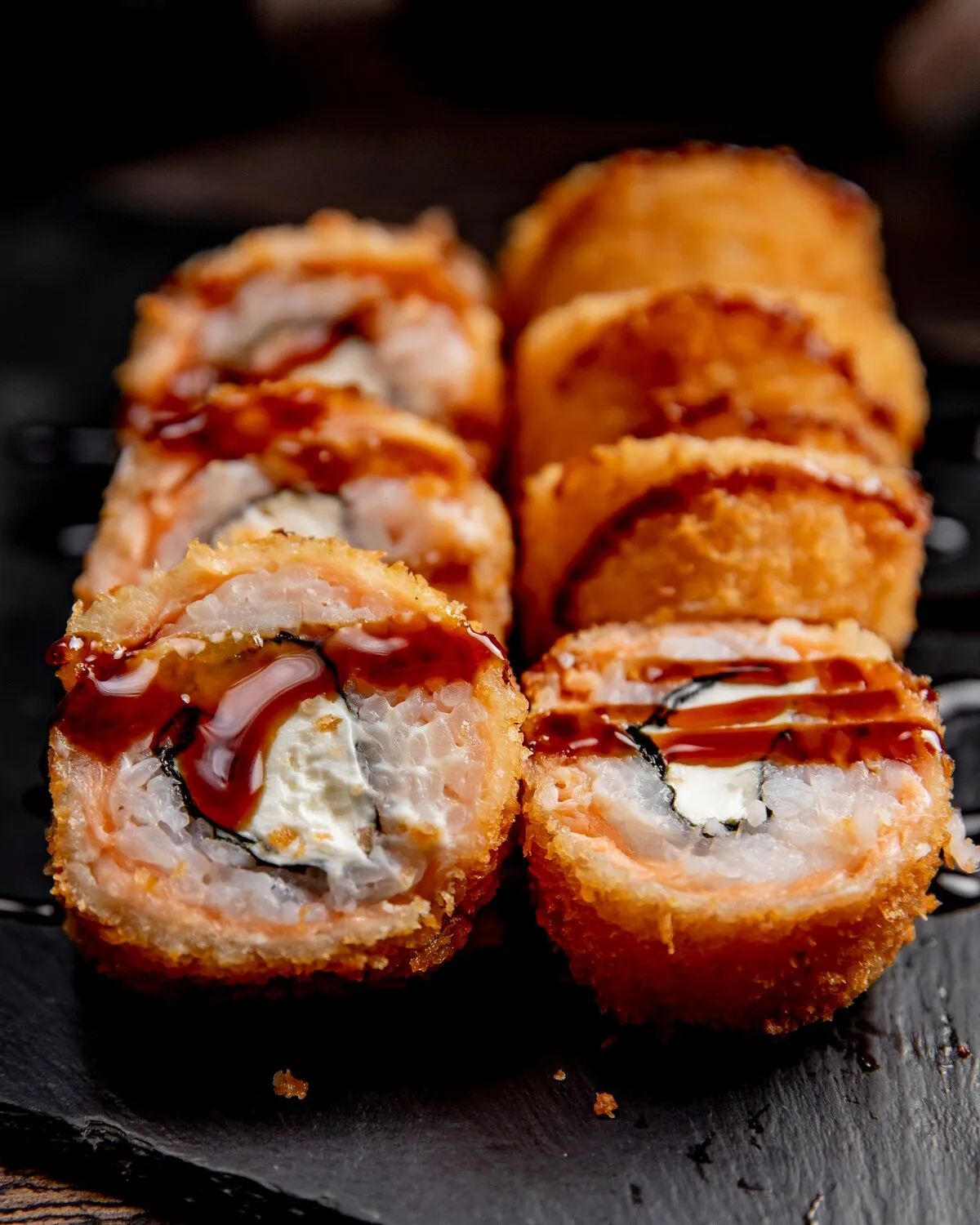

Hot Roll
Fried sushi roll, typically filled with salmon, cream cheese, and other ingredients.
Nutrition Facts
* The % Daily Value (DV) tells you how much a nutrient in a serving of food contributes to a daily diet. 2,000 calories a day is used for general nutrition advice.
Premium Feature
Tokiomaki
Premium Feature
The Hot Roll, also known as a Fried Sushi Roll, is a modern invention within American sushi culture. It is not a traditional Japanese dish but rather a product of adapting sushi to Western palates, often incorporating ingredients and techniques not commonly found in authentic Japanese cuisine. It emerged alongside other fusion sushi variations in the late 20th century.
Premium Feature
Hot Rolls reflect the Americanization of sushi, catering to a broader audience by incorporating familiar flavors and textures. They are often viewed as a more accessible and less intimidating entry point to sushi for those unfamiliar with raw fish.
Fusion Cuisine
Hot Rolls are a prime example of fusion cuisine, blending Japanese sushi techniques with American preferences for cooked ingredients and bolder flavors. They are often found in American sushi restaurants rather than traditional Japanese establishments.
Accessibility
The use of cooked fish and creamy ingredients makes Hot Rolls a popular choice for those who are hesitant to try raw seafood. This has helped to expand the popularity of sushi among a wider range of consumers.
Premium Feature
The Hot Roll offers a contrast of textures and temperatures, combining the creamy, rich filling with a crispy, warm exterior. The overall flavor profile is savory and rich, often enhanced by sweet and/or spicy sauces.
The primary flavors come from the cooked salmon, which provides a savory, slightly oily taste. Cream cheese contributes a creamy, tangy richness. Avocado, when present, adds a smooth, buttery element. The tempura batter, or panko breading, offers a crispy texture and a slightly savory, fried flavor. Sauces, such as eel sauce (unagi sauce), spicy mayonnaise, or sweet chili sauce, add layers of sweetness, spice, and umami.
Premium Feature
Rolling Technique
Roll the sushi tightly to prevent it from falling apart during frying. A bamboo rolling mat (makisu) is essential for achieving a firm, even roll.
Batter Consistency
If using tempura batter, ensure it is cold and the correct consistency (not too thick or too thin) to achieve a light, crispy coating. Panko breadcrumbs also provide a good alternative for coating and frying.
Frying Temperature
Maintain the correct oil temperature (around 350-375°F or 175-190°C) for frying to ensure even cooking and prevent the roll from becoming greasy. Do not overcrowd the fryer.
Serving Immediately
Hot Rolls are best served immediately after frying to maintain their crispiness and temperature contrast. Garnish with sauces and toppings as desired.
Premium Feature
Explore additional Sushi dishes and restaurants
Explore SushiDiscover top dining spots and culinary experiences in Porto Velho.
Explore Porto VelhoLearn more about the food culture, restaurant scene, and culinary heritage of Brazil.
Explore Brazil