
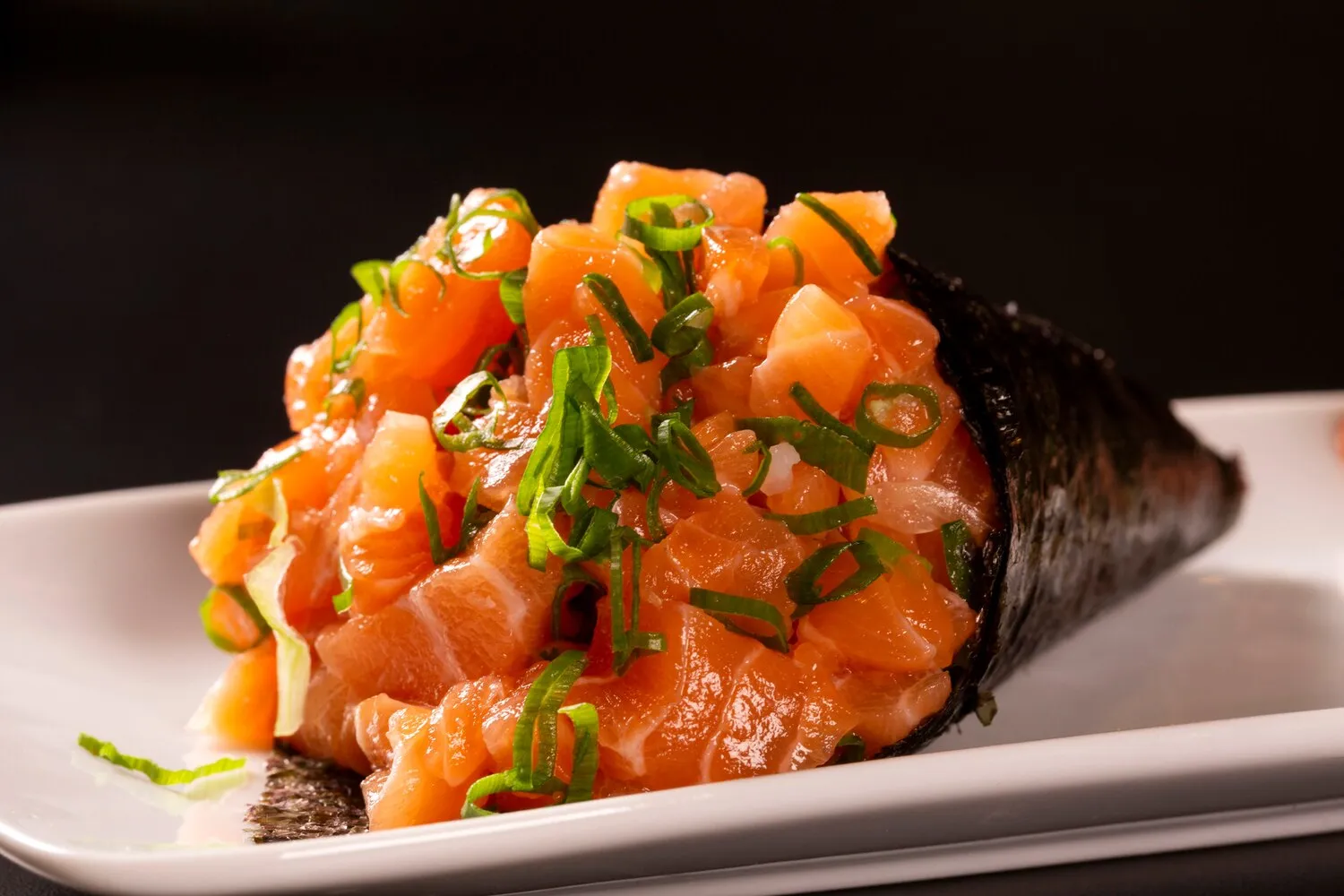

Temaki
Cone-shaped sushi hand roll.
Nutrition Facts
* The % Daily Value (DV) tells you how much a nutrient in a serving of food contributes to a daily diet. 2,000 calories a day is used for general nutrition advice.
Premium Feature
Tokiomaki
Premium Feature
Sushi evolved from a method of preserving fish in fermented rice. While earlier forms existed, the Edo period (1603-1868) saw the development of faster, more convenient sushi styles. Temaki, being a hand-rolled style, likely emerged as a more casual and accessible form of sushi, allowing for individual customization and quick preparation.
Premium Feature
Temaki is often enjoyed as a fun, interactive dish, suitable for casual gatherings and parties. Its customizable nature makes it a popular choice for accommodating different dietary preferences and individual tastes. It is seen as a relaxed and approachable way to experience sushi.
DIY Sushi
Temaki's self-assembly format makes it a participatory dining experience. Everyone can customize their own rolls with their preferred fillings, fostering a sense of shared creation and enjoyment.
Casual Dining
Unlike more formal sushi preparations, Temaki is typically eaten by hand and doesn't require specialized chopstick skills, making it a more accessible option for a wide range of people.
Social Gathering
The interactive nature of Temaki makes it ideal for parties and social events. Guests can gather around a table filled with ingredients and create their own personalized rolls, fostering conversation and camaraderie.
Premium Feature
Temaki offers a vibrant combination of savory, umami, and fresh flavors. The nori seaweed provides a distinct marine aroma and a slightly salty taste, while the vinegared rice offers a balanced sweetness and acidity. The fillings contribute a range of flavors depending on the ingredients used.
The fundamental flavors derive from the seasoned sushi rice (sushi-meshi) prepared with rice vinegar, sugar, and salt. Nori seaweed contributes a roasted, slightly briny taste. Common fillings like raw fish (tuna, salmon, yellowtail) provide a rich umami and a buttery texture. Vegetables like cucumber, avocado, and sprouts add freshness and crispness. Condiments like wasabi offer a pungent spice, while ginger (gari) cleanses the palate. Mayonnaise-based sauces can add creaminess and richness, sometimes with a hint of sweetness or spice (e.g., spicy mayo).
Premium Feature
Rice Temperature
Ensure the sushi rice is at room temperature or slightly warm. Cold rice can become hard and less pliable.
Nori Crispness
Prepare the temaki just before serving to prevent the nori from becoming soggy. If needed, lightly toast the nori before using to maintain its crispness longer.
Filling Placement
Don't overfill the temaki. Place a small amount of ingredients in the center of the nori sheet, allowing room for rolling without tearing.
Eat Immediately
Temaki is best eaten immediately after assembly to enjoy the contrast of textures and prevent the nori from becoming soggy.
Premium Feature
Explore additional Sushi dishes and restaurants
Explore SushiDiscover top dining spots and culinary experiences in Porto Velho.
Explore Porto VelhoLearn more about the food culture, restaurant scene, and culinary heritage of Brazil.
Explore Brazil