
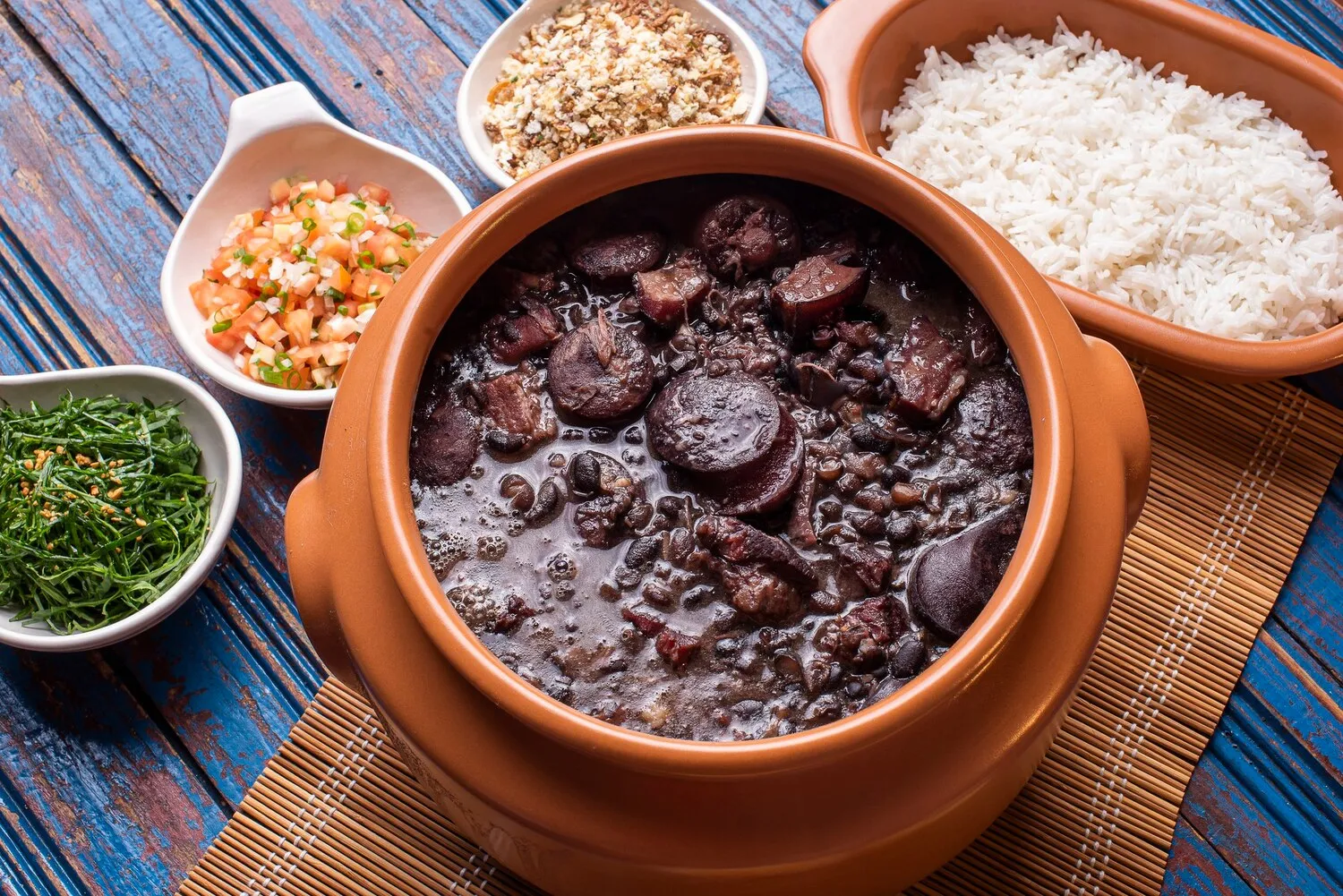

Feijoada
A rich and hearty black bean stew with various cuts of pork, beef, and sausage. A quintessential Brazilian dish, often served on weekends.
Nutrition Facts
* The % Daily Value (DV) tells you how much a nutrient in a serving of food contributes to a daily diet. 2,000 calories a day is used for general nutrition advice.
Premium Feature
Pollo Restaurante
Premium Feature
Feijoada's origins are somewhat debated. One popular theory suggests it emerged from the enslaved African population in Brazil, who utilized discarded or less desirable cuts of pork left over by their enslavers, combining them with black beans, a staple food. However, other theories point to Portuguese influence, arguing that it evolved from similar stews found in Portugal that feature beans and various meats.
Premium Feature
Feijoada is much more than just a dish; it's a symbol of Brazilian national identity and a culinary tradition deeply ingrained in the country's culture. It's typically enjoyed on weekends, especially Saturdays, as a communal meal, bringing families and friends together.
Social Gathering
Feijoada is traditionally a shared meal, often prepared in large quantities and enjoyed with friends and family. The act of cooking and eating it together is a social experience in itself.
Saturday Tradition
Eating Feijoada on Saturdays is a long-standing tradition in Brazil. Restaurants often feature it as a special dish on Saturdays, and families frequently prepare it at home.
Regional Variations
While the core ingredients remain relatively consistent, regional variations of Feijoada exist throughout Brazil, reflecting local culinary preferences and available ingredients. Some regions might include different types of sausages or beef cuts, while others might emphasize certain spices.
Premium Feature
Feijoada boasts a rich and savory flavor profile, deeply infused with smoky, salty, and umami notes derived from the combination of black beans and various pork and beef cuts.
The core flavor comes from the black beans, cooked until creamy and tender. Different cuts of pork, like salted pork belly (barriga), smoked sausages (linguiça and paio), dried beef (carne seca), and pork ribs, contribute distinct textures and flavors. Some variations may include beef cuts. Seasonings often involve garlic, onions, bay leaves, and sometimes malagueta peppers for a touch of heat. The overall taste is intensely savory, often tempered by accompaniments like rice, collard greens, orange slices, and farofa (toasted cassava flour).
Premium Feature
Soak the Beans
Soaking the black beans overnight (or for at least 6 hours) is crucial to reduce cooking time and ensure they cook evenly. Discard the soaking water before cooking.
Desalt the Pork
Salted pork cuts need to be desalinated before cooking. This involves soaking them in water for several hours, changing the water periodically. The soaking time depends on the saltiness of the pork.
Cook Slowly
Feijoada benefits from slow cooking, allowing the flavors to meld together and the meats to become tender. A low and slow simmer is ideal.
Serve with Accompaniments
The traditional accompaniments to Feijoada are essential for balancing the rich flavors. Serve it with white rice, collard greens, farofa, and orange slices. A dash of hot sauce can also add a nice kick.
Premium Feature
Explore additional Brazilian stew dishes and restaurants
Explore Brazilian stewDiscover top dining spots and culinary experiences in São Gonçalo.
Explore São GonçaloLearn more about the food culture, restaurant scene, and culinary heritage of Brazil.
Explore Brazil