
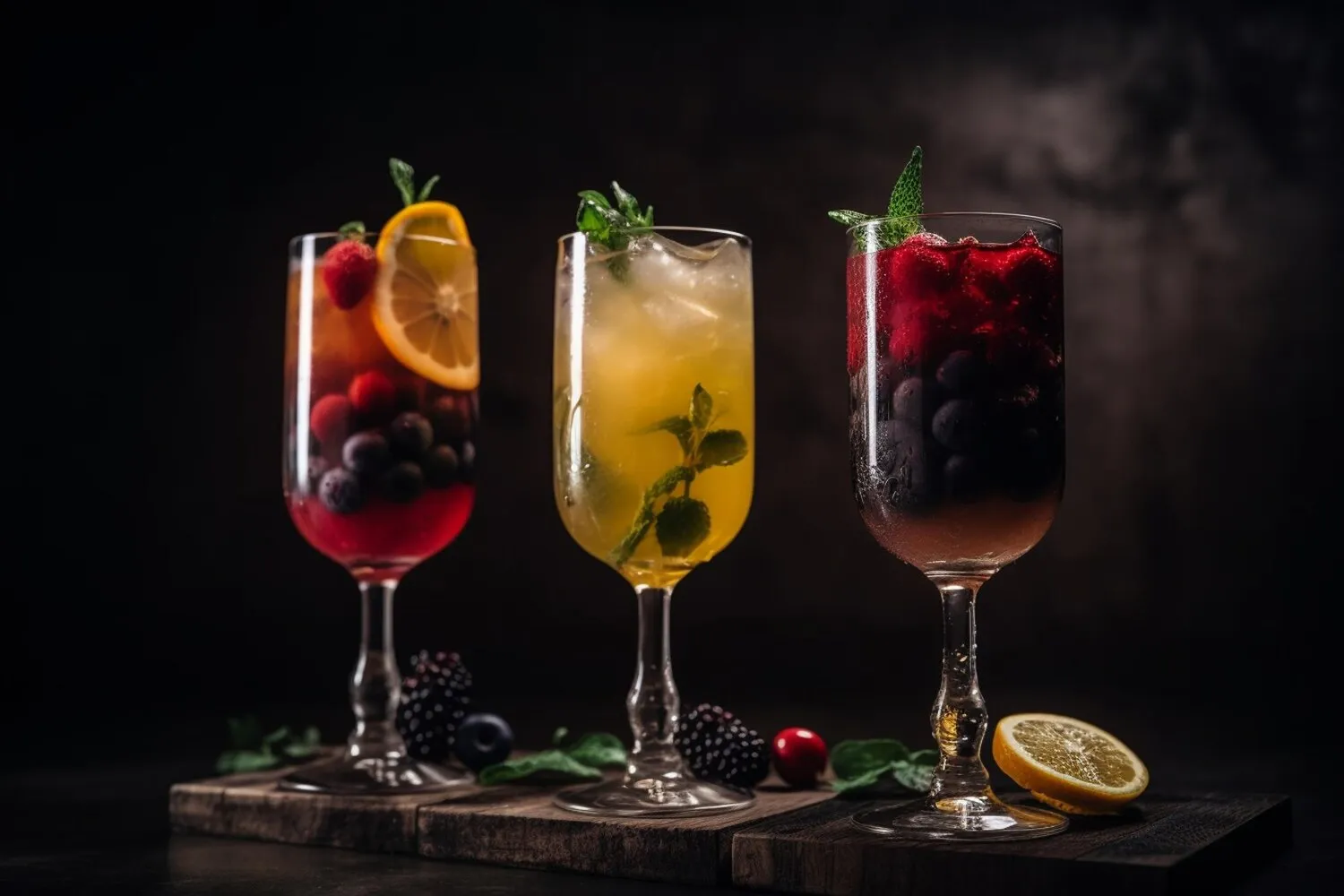

Cocktails
A range of cocktails, often enjoyed during aperitivo time.
Nutrition Facts
* The % Daily Value (DV) tells you how much a nutrient in a serving of food contributes to a daily diet. 2,000 calories a day is used for general nutrition advice.
Premium Feature
Premium Feature
Cocktails evolved from punches and medicinal drinks in the 18th and 19th centuries. Early cocktails often combined spirits, sugar, water, and bitters. The term 'cocktail' itself has debated origins, but its popularity surged in the United States and Europe throughout the 20th century, influenced by Prohibition, changing social norms, and the rise of mixology.
Premium Feature
Cocktails are deeply ingrained in social and cultural practices around the world, often associated with celebrations, relaxation, and social gatherings. They are a symbol of conviviality and sophistication.
Aperitivo Culture
In many cultures, particularly in Italy, cocktails are central to the 'aperitivo' tradition. This is a pre-dinner ritual where drinks are enjoyed alongside small snacks to stimulate the appetite and socialize before a meal.
Happy Hour
In many Western countries, 'happy hour' features discounted cocktails and appetizers, encouraging people to unwind after work and socialize.
Celebrations and Events
Cocktails are often a centerpiece of celebrations, from weddings and birthdays to holiday parties and corporate events. Specific cocktails are often associated with particular holidays or events (e.g., eggnog at Christmas, margaritas on Cinco de Mayo).
Premium Feature
Cocktail flavors are incredibly diverse, ranging from sweet and sour to bitter and spicy, depending on the ingredients used. The key is balance and complexity.
The range of cocktail flavors is practically limitless, determined by the spirit base (vodka, gin, rum, whiskey, tequila, etc.), mixers (juices, sodas, syrups), modifiers (liqueurs, bitters, vermouth), and garnishes (citrus peels, herbs, olives). Common flavor profiles include: Sweet (from sugars, syrups, liqueurs), Sour (from citrus juices), Bitter (from bitters, vermouth, amari), Spicy (from ginger, chili peppers, spices), and Aromatic (from herbs, essential oils). The interaction of these elements creates the distinctive character of each cocktail.
Premium Feature
Use Fresh Ingredients
Freshly squeezed juices, homemade syrups, and quality spirits significantly enhance the flavor of a cocktail. Avoid using pre-made mixes whenever possible.
Proper Measurement
Accurate measurements are essential for balancing flavors. Use jiggers or measuring spoons to ensure consistency.
Ice Matters
The type and amount of ice can affect the dilution and temperature of a cocktail. Use large ice cubes to minimize dilution in drinks served on the rocks, and crushed ice for drinks like mint juleps.
Garnish with Intention
Garnishes are not just for decoration; they should complement the flavors of the drink. A citrus peel can add aroma and flavor, while a sprig of herbs can enhance the complexity of the drink.
Premium Feature
Explore additional Cocktails dishes and restaurants
Explore CocktailsDiscover top dining spots and culinary experiences in Ancona.
Explore AnconaLearn more about the food culture, restaurant scene, and culinary heritage of Italy.
Explore Italy