
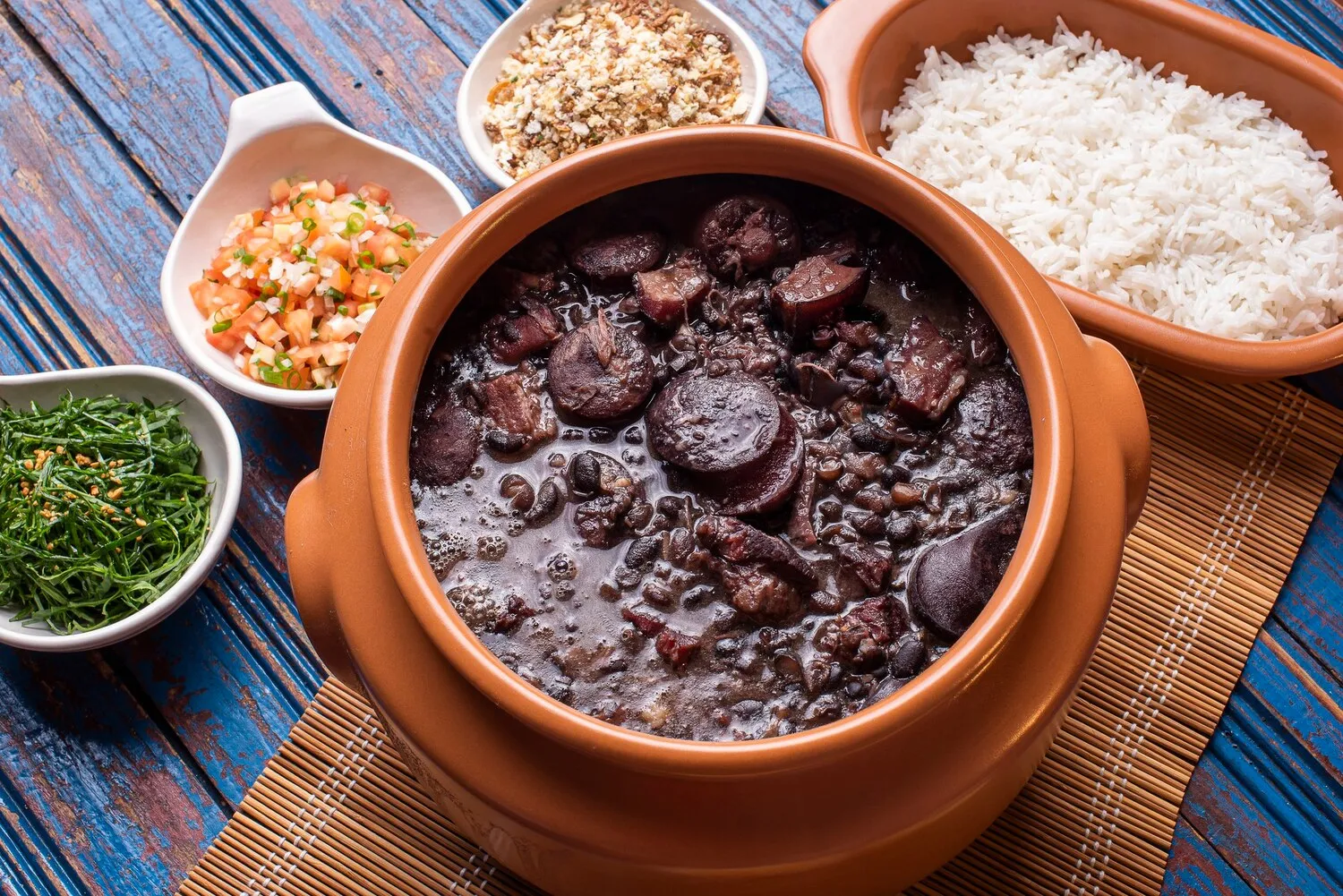

Feijoada
A hearty black bean stew with various cuts of pork, beef, and sausage. Often served with rice, collard greens, farofa (toasted cassava flour), and orange slices.
Nutrition Facts
* The % Daily Value (DV) tells you how much a nutrient in a serving of food contributes to a daily diet. 2,000 calories a day is used for general nutrition advice.
Premium Feature
The Grill From Ipanema
Premium Feature
Feijoada's origins are debated, but a popular theory suggests it emerged from enslaved Africans in Brazil. They were given discarded or less desirable cuts of pork from their Portuguese colonizers and combined them with black beans, a staple, to create a filling and flavorful meal. Over time, the dish evolved with regional variations and became a symbol of Brazilian national identity.
Premium Feature
Feijoada is more than just a dish in Brazil; it's a cultural institution and a symbol of national identity. It is often enjoyed during social gatherings, family celebrations, and on weekends, fostering a sense of community and togetherness.
Sunday Tradition
Feijoada is traditionally eaten on Wednesdays and Saturdays or Sundays, especially for family meals. The weekend feast allows ample time for preparation and shared enjoyment.
Social Gathering
It's a dish that encourages sharing and celebration, bringing people together around a communal pot. The slow-cooked nature of the dish invites conversation and camaraderie.
Regional Variations
While the core ingredients remain the same, feijoada has regional variations throughout Brazil, reflecting local ingredients and preferences. For example, some regions might include different types of sausage or beef.
National Identity
Feijoada is considered one of Brazil's national dishes, representing the country's rich culinary heritage and cultural diversity. It connects Brazilians across different regions and social classes.
Premium Feature
Feijoada is characterized by its rich, savory, and slightly smoky flavors. The combination of various pork cuts, beef, and sausage imparts a complex depth of flavor, while black beans provide a hearty, earthy base. The accompanying side dishes offer contrasting textures and flavors.
The flavor profile is a delightful combination of salty, meaty, and earthy notes. Smoked sausage adds a smoky depth, while different cuts of pork like salted pork (carne seca) contribute to the savory dimension. The black beans offer an earthy undertone, while additions like bay leaf and garlic enhance the overall complexity. The sides, such as rice, collard greens, and farofa (toasted cassava flour), contribute diverse textures and flavors - the rice offering a neutral counterpoint, the collard greens providing bitterness, and the farofa adding a crunchy, nutty element. Orange slices served alongside offer a refreshing citrus contrast that cuts through the richness of the stew.
Premium Feature
Soak the Beans
Soaking the black beans overnight is crucial. This helps to soften them, reduce cooking time, and improve their digestibility.
Desalting the Meat
Salted meats (like carne seca) need to be desalted before cooking. Soak them in water, changing the water several times, to remove excess salt.
Quality Ingredients Matter
Using high-quality cuts of pork, beef, and sausage will significantly enhance the flavor of your feijoada. Look for smoked sausages with good flavor and well-marbled pork.
Patience is Key
Feijoada is a slow-cooked dish, so be patient! Allow ample time for the flavors to meld together and the meats to become tender.
Serve with the Traditional Sides
Don't skip the traditional accompaniments: white rice, collard greens, farofa, and orange slices. These sides complement the feijoada and complete the dining experience.
Premium Feature
Explore additional Stew dishes and restaurants
Explore StewDiscover top dining spots and culinary experiences in Washington.
Explore WashingtonLearn more about the food culture, restaurant scene, and culinary heritage of United States.
Explore United States